Research

Pages related to research at the CBBL

Roger Casals Presents Boolyne at ECCB 2026

By |2026-09-01T13:58:13+00:00September 1, 2026|CBBL News, Conferences, PhD, Research|

This week, our researcher Roger Casals presented a poster at ECCB 2026, the 25th European Conference on Computational Biology, held in Geneva and one of the leading events in computational biology, gathering more than 800 posters and 1,500 participants.
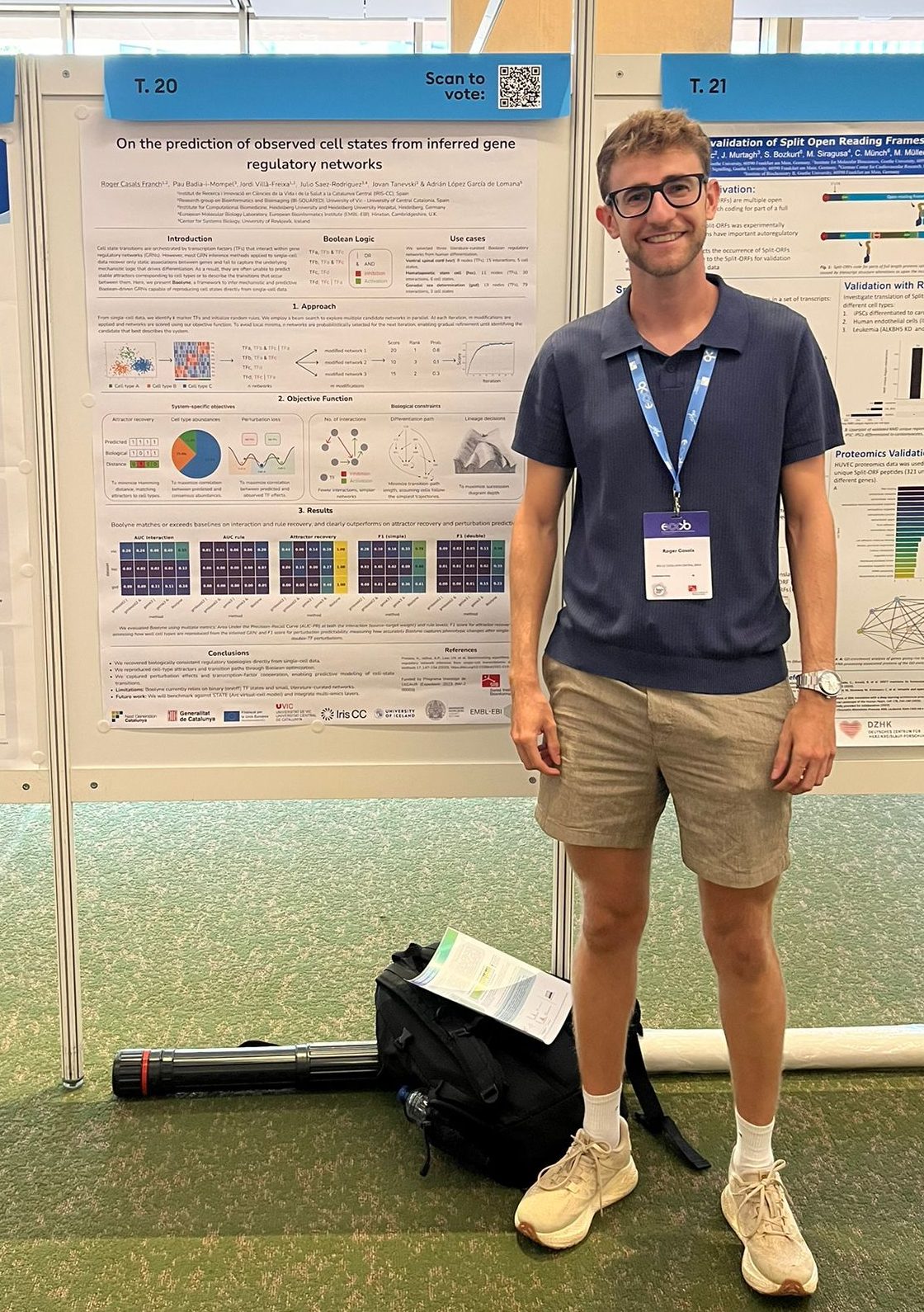
Roger Casals standing next to his poster on gene regulatory network inference at ECCB 2026
Roger Casals with poster T.20, “On the prediction of observed cell states from inferred gene regulatory networks,” at ECCB 2026.

He presented Boolyne, a framework for inferring gene regulatory networks (GRNs) directly from single-cell data. Most GRN inference methods only recover static associations between genes, so they can’t explain the mechanistic logic that drives how cells differentiate. Boolyne instead learns Boolean-driven networks that reproduce real cell states and the transitions between them, with the aim of building a genuinely predictive model—one that can anticipate how cells respond to perturbations rather than just describe what’s already been observed.
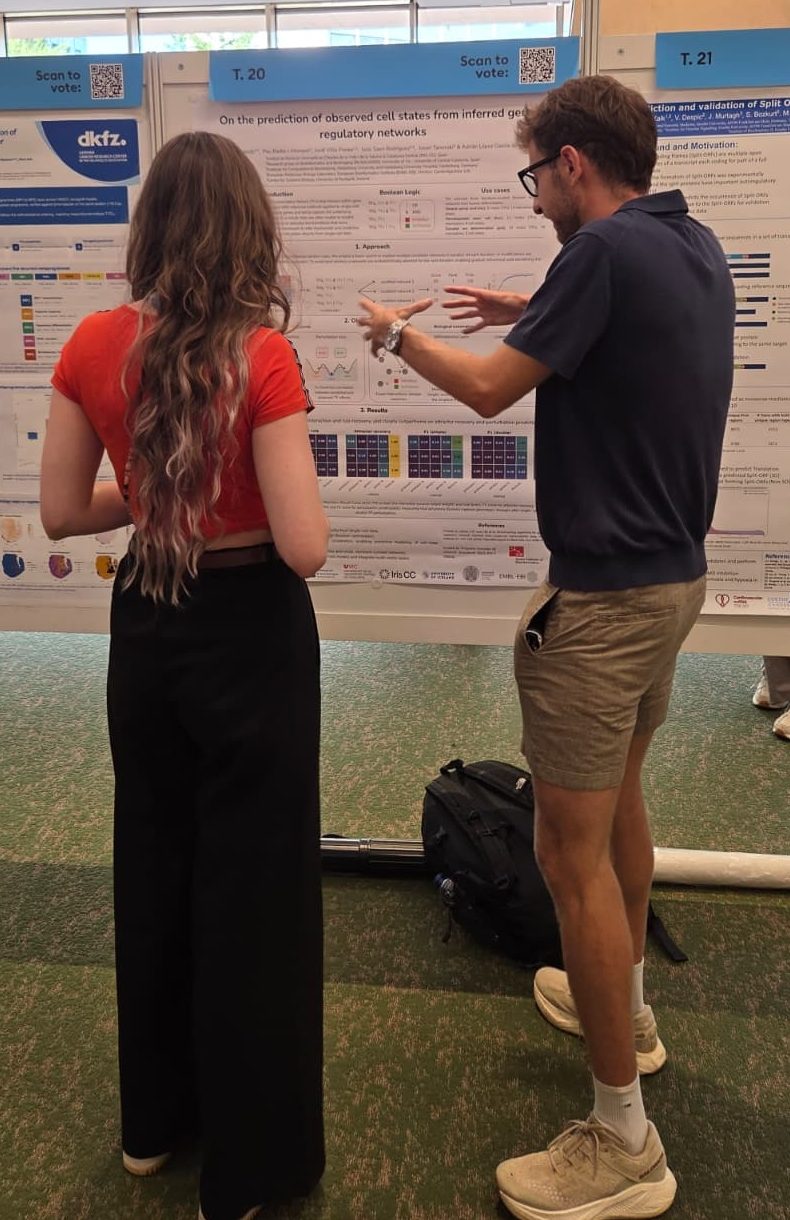
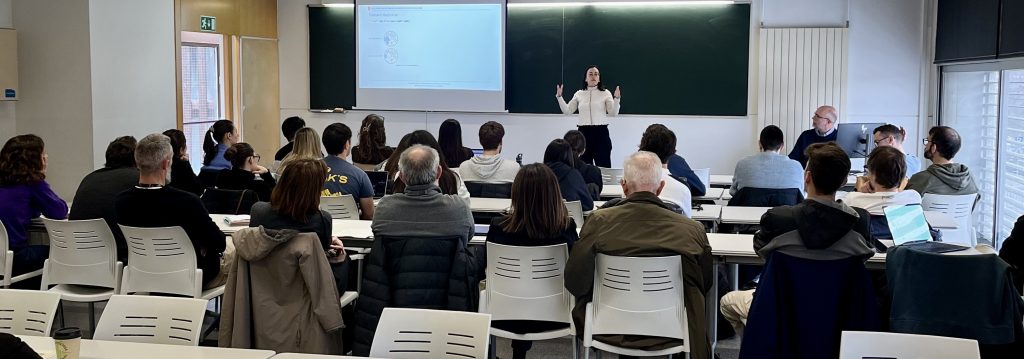
Roger Casals discussing his poster with a colleague during the ECCB 2026 poster session
Discussing Boolyne with a fellow attendee during the poster session.

Beyond the results, events like ECCB are a valuable chance to exchange ideas with the wider community and bring new questions back to our research.

Work carried out with Pau Badia-i-Mompel, Jordi Villà-Freixa, Julio Saez-Rodriguez, Jovan Tanevski, and Adrián López García de Lomana (IRIS-CC · UVic-UCC · Heidelberg · EMBL-EBI · University of Reykjavík).

This latest result builds on Roger’s earlier work on gene regulatory networks and cell-state transitions from single-cell data, previously presented at scverse 2025 at Stanford, at the XV Bioinformatics Symposium (JBI2025), at the SEBiBC congress, and in the poster selected for the VHIO Award of Computing in Oncology.
Nayanika Das Presents Advances in GPX6 Catalysis at ACS Fall 2026

By |2026-09-01T09:33:30+00:00September 1, 2026|CBBL News, Conferences, PhD, Publications, Research|

Our PhD researcher, Nayanika Das, presented her work at ACS Fall 2026, the American Chemical Society’s national meeting held in Chicago from August 23 to 27, 2026, during the in-person poster session of the Physical Chemistry (PHYS) Division.

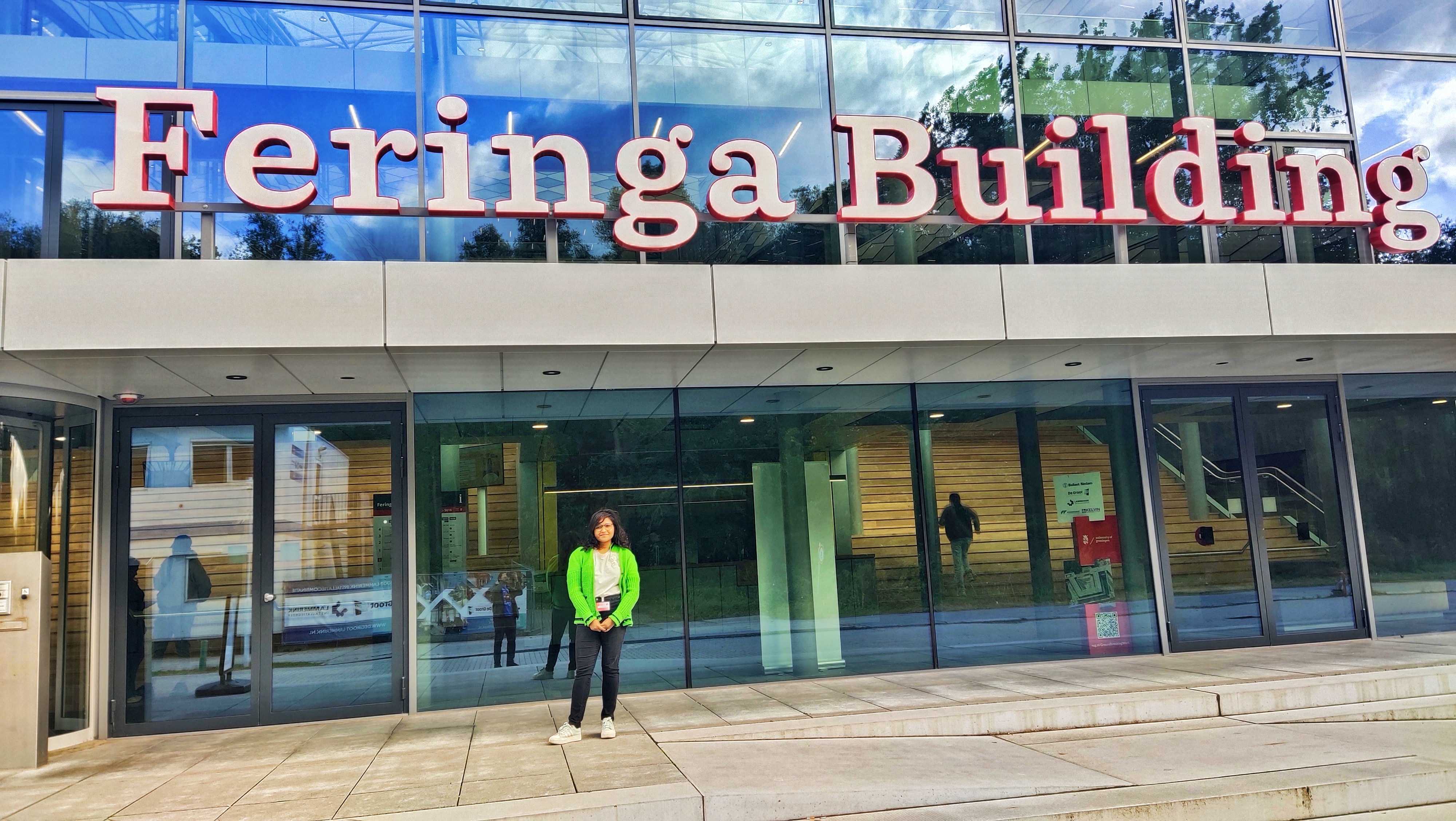
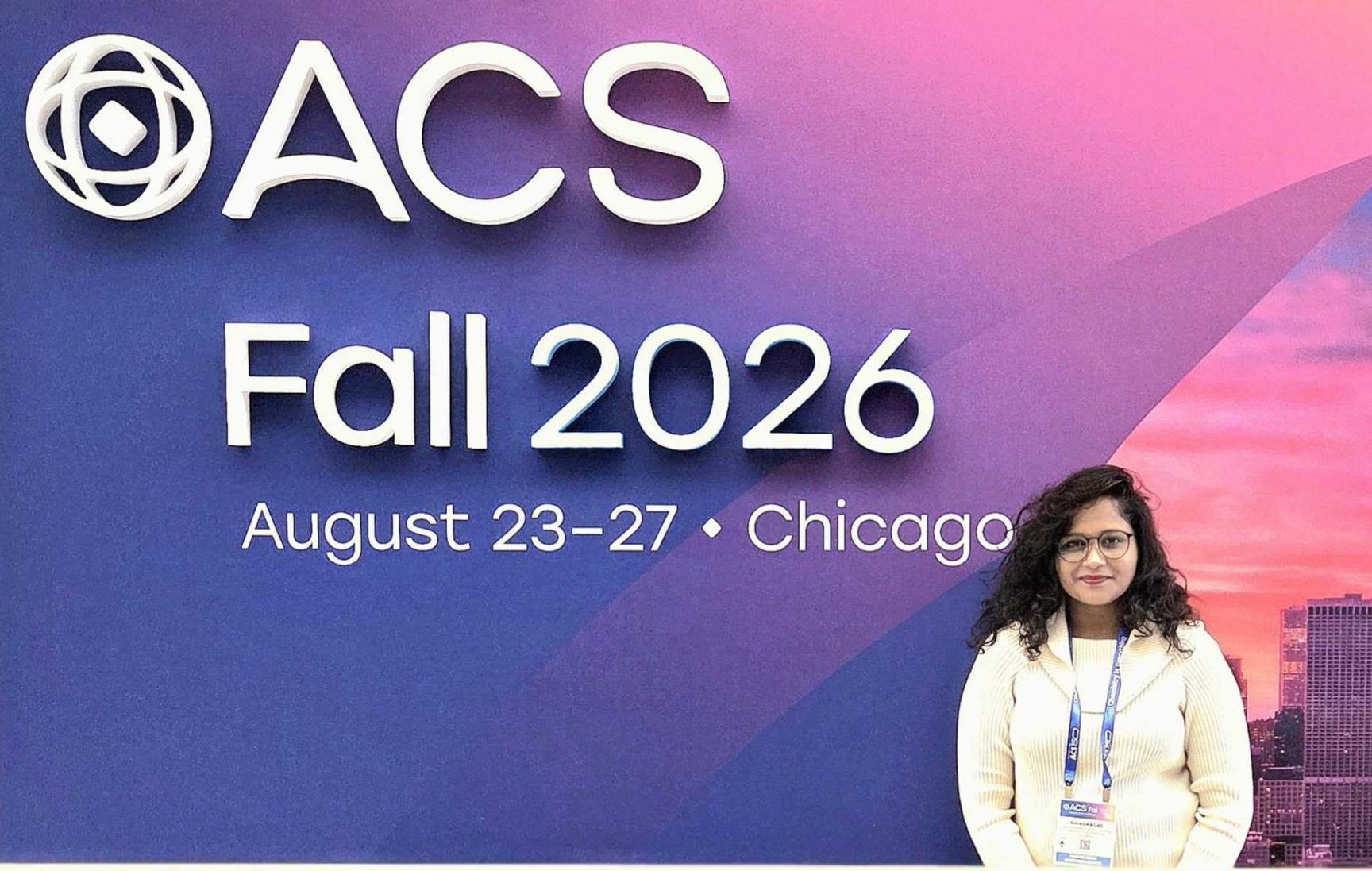
Nayanika Das at the ACS Fall 2026 Chicago
Nayanika Das at ACS Fall 2026, Chicago (August 23–27, 2026).

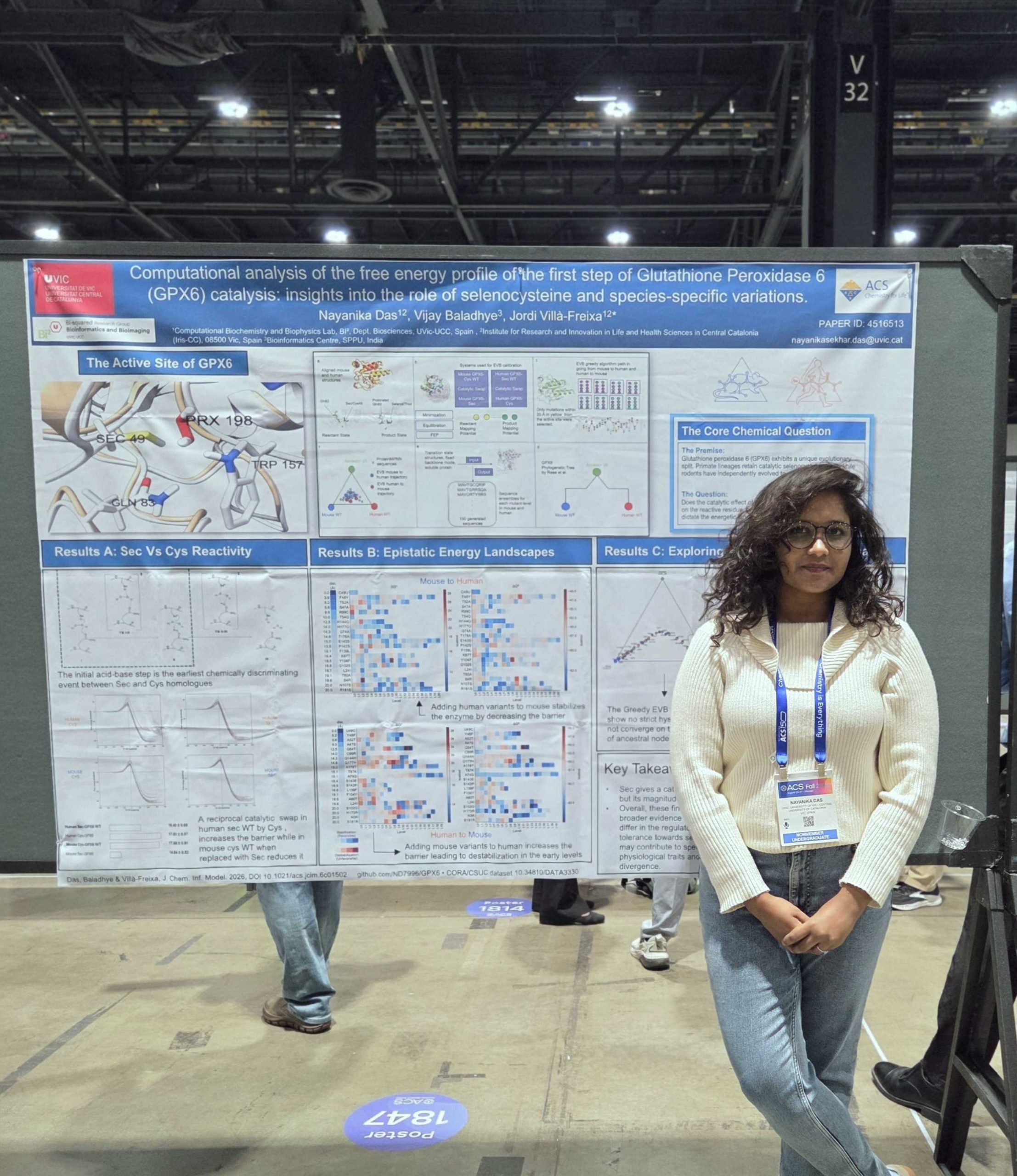
Her contribution, entitled “Computational Analysis of the Free Energy Profile of the First Step of Glutathione Peroxidase 6 (GPX6) Catalysis: Insights into the Role of Selenocysteine and Species-Specific Variations” (Poster 1847, Paper ID 4516513), explores the molecular and evolutionary factors influencing GPX6 catalysis.

Using computational free-energy calculations, the study investigates the role of the catalytic residue—selenocysteine (Sec) or cysteine (Cys)—and species-specific sequence variations. It further examines how interactions between mutations, or epistasis, can influence catalytic properties and contribute to protein evolution.

Nayanika Das next to her poster on GPX6 catalysis during the ACS Fall 2026 poster session
Presenting poster 1847 during the PHYS Division poster session.

The conference provided an excellent opportunity to share this research with an international scientific community and engage in discussions across computational chemistry, biochemistry, and molecular sciences.

The work presented builds on the lab’s related study on GPX6 catalysis, published in the Journal of Chemical Information and Modeling (DOI: 10.1021/acs.jcim.6c01502), with code and analysis openly available on GitHub and the underlying dataset deposited in the CORA/CSUC repository.

Nayanika’s participation in ACS Fall 2026 marks an important milestone in her doctoral research at the intersection of computational chemistry, protein catalysis, and molecular evolution. She gratefully acknowledges COZYME and IRIS-CC for providing the grants that made her participation possible.

EVB Free-Energy Landscapes Reveal Epistasis in GPX6 Evolution

By |2026-09-01T09:33:45+00:00July 21, 2026|CBBL News, PhD, Publications, Research|

A new study from the Computational Biochemistry and Biophysics Lab uses empirical valence bond simulations to show that the catalytic advantage of selenocysteine in GPX6 is not fixed: it depends on the surrounding protein sequence.

  • Article: Epistatic Modulation of Sec/Cys Catalysis in GPX6 Revealed by EVB Free-Energy Landscapes
  • Authors: Nayanika Das, Vijay Baladhye, Jordi Villà-Freixa
  • Journal: Journal of Chemical Information and Modeling
  • DOI: 10.1021/acs.jcim.6c01502
Human GPX6 keeps selenocysteine at its catalytic site, while rodent GPX6 lineages use cysteine. The study asks whether this is a simple residue swap or a deeper evolutionary reorganization. EVB simulations quantified the proton-transfer step that creates the reactive selenolate or thiolate species in human and mouse GPX6 variants.When a catalytic residue is not the whole storyThe same catalytic substitution can have different energetic consequences in different sequence backgrounds, a clear sign of epistasis in enzyme evolution.

Selenium often gives enzymes a chemical advantage. In glutathione peroxidases, selenocysteine can form a highly reactive selenolate, helping the enzyme reduce peroxides. GPX6 is especially informative because mammals have not all kept the same solution: primate GPX6 retains catalytic selenocysteine, whereas rodents and several other mammalian lineages have independently shifted to cysteine.

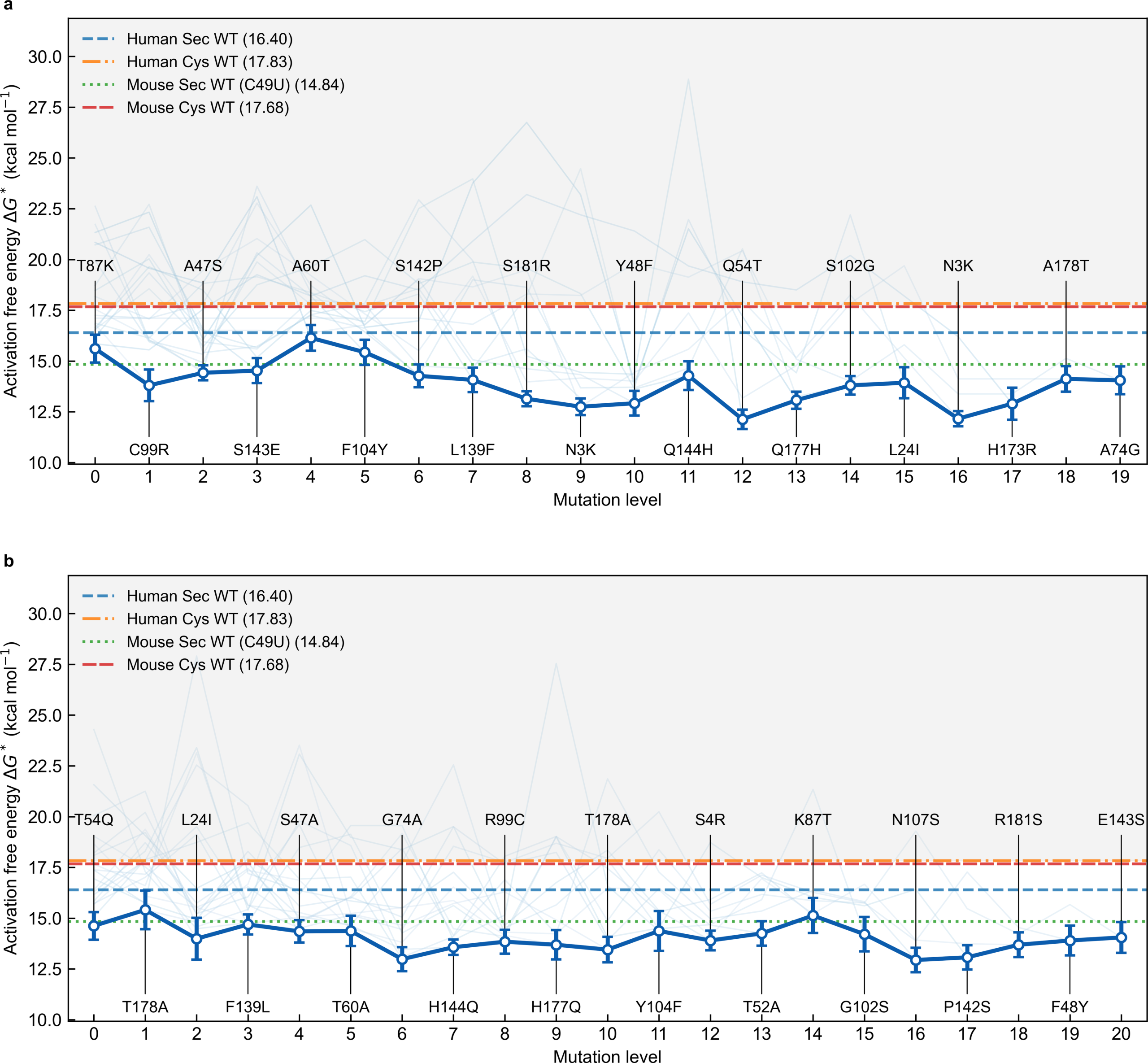
The new work shows that this evolutionary change cannot be understood by looking only at the catalytic atom. In the human protein, replacing selenocysteine with cysteine raises the activation barrier for the modeled proton-transfer step by 1.43 kcal mol-1. In the mouse protein, introducing selenocysteine lowers the barrier by 2.84 kcal mol-1. The chemistry of selenium matters, but the protein scaffold decides how much it matters.

Epistasis seen through free-energy landscapes

Nayanika Das then explored 20 substitutions close to the catalytic site and used EVB-derived activation barriers to identify energetically accessible paths between human and mouse GPX6. The result is a molecular view of epistasis: a substitution can be favorable, neutral, or unfavorable depending on the other residues already present.

This helps explain why rodent Cys-GPX6 should not be interpreted as a simple loss of selenium chemistry. Instead, the calculations support a model in which the rodent enzyme accumulated compensatory changes that help support catalysis with cysteine. Evolution appears constrained by the energetic landscape, but not locked into a single irreversible route.

The study represents a strong example of how detailed molecular simulations can connect catalytic chemistry with evolutionary history.

Why EVB matters for enzyme evolution and design

Empirical valence bond simulations are useful here because they translate sequence changes into changes in reaction free energy and activation barriers. That makes it possible to ask not only which mutations are present in evolution, but how they reshape the chemical step that an enzyme must perform.

This has implications beyond GPX6. For evolutionary enzymology, EVB can help identify compensatory mutations, alternative mutational routes, and sequence backgrounds where a catalytic residue change becomes viable. For enzyme design, the same logic suggests a practical strategy: use sequence or structure-based models to propose variants, then use EVB to rank them by their predicted catalytic barriers in more than one protein background.

The study therefore positions EVB as a bridge between molecular mechanism, evolutionary contingency, and future enzyme engineering. It shows that catalytic design should not treat active-site substitutions as isolated edits, but as changes whose success depends on the full energetic context of the protein.

Join the lab within the UVic interns programme

By |2026-09-01T09:31:00+00:00July 6, 2026|CBBL News, Group, Research|

International research internships at the CBBL through the UVic Interns Programme

Are you an international Bachelor’s, Master’s or PhD student interested in spending a research period in our lab?
The Computational Biochemistry and Biophysics Laboratory (CBBL) at UVic-UCC welcomes motivated students who would like to develop an academic traineeship in computational biology, bioinformatics, molecular modelling, omics data analysis, or related areas.

Through the UVic Interns Programme, international students can apply for a research traineeship at UVic-UCC with an educational purpose, while remaining enrolled at their home university.

Our lab works at the interface of computational biochemistry, biophysics, bioinformatics and quantitative biology. Current research interests include molecular simulations, enzyme function and design, protein–ligand and protein–protein interactions, gene regulatory networks, single-cell and omics data analysis, and computational approaches to complex biological systems.

You can learn more about our research here:

Students interested in joining us for a research stay should send a short motivation letter and CV, indicating their academic background, research interests, preferred dates, and whether the traineeship is connected to an Erasmus+, curricular internship, Master’s thesis, PhD mobility stay, or another mobility scheme.

Contact: Jordi Villà-Freixa
jordi.villa@uvic.cat

We look forward to welcoming motivated international students to Vic and to the CBBL.

The CBBL Organizes an Update Workshop on Omics Data Analysis at the UVic-UCC

By |2026-09-01T09:34:35+00:00December 19, 2025|CBBL News, Research, Scientific outreach, Teaching|

The Computational Biochemistry and Biophysics Laboratory (CBBL), part of the Bioinformatics and Bioimaging Research Group (Bi-Squared) at the University of Vic – Central University of Catalonia (UVic-UCC), in collaboration with the Central Catalonia Institute for Health Research (IRIS-CC), organized the workshop “Update in Omics Data Analysis: genome structure, metagenomics and gene regulation”. The session provided a forum to discuss and review recent developments in omics data analysis, aimed at researchers, students, and professionals in the field.

Held shortly before Christmas at the Torre dels Frares Campus in Vic, the event brought together postdoctoral researchers who presented and discussed recent advances in key areas of bioinformatics, including genome structure, metagenomics, and gene regulation using large-scale omics datasets. The workshop concluded with a round-table discussion that encouraged dialogue on emerging challenges and future directions in biological data analysis.

The program featured presentations by:

This workshop aligns with IRIS-CC’s outreach and training initiatives and supports scientific exchange and skills development within the bioinformatics and bioimaging research community.

For more information, please visit the event webpage: Update in Omics Data Analysis: genome structure, metagenomics and gene regulation.

PhD Student Nayanika Das Begins Research Visit at the University of Groningen

By |2026-09-01T09:35:11+00:00October 10, 2025|CBBL News, PhD, Research|

We are delighted to share that our PhD student Nayanika Das has embarked on a research visit to the laboratory of Prof. Gerard Roelfes at the University of Groningen, The Netherlands. This visit marks an exciting step forward in her doctoral work on understanding and optimizing the function of enzymes, this time for proteins containing artificial amino acids.

During her stay, Nayanika will collaborate closely with the Roelfes group to investigate the incorporation of the noncanonical amino acid para-aminophenylalanine (pAF) into the nonenzymatic protein scaffold LmrR. Remarkably, this modification transforms LmrR into a proficient and stereoselective artificial enzyme (LmrR_pAF) — an elegant example of how chemical innovation can endow proteins with entirely new catalytic functions.

Nayanika’s research will combine experimental validation in the laboratory with computational modeling efforts. Specifically, she will contribute to the development of an Empirical Valence Bond (EVB) model aimed at uncovering the molecular details of the mechanism of action of pAF in the reactions catalyzed by LmrR_pAF. By integrating theoretical and experimental approaches, her work will help elucidate how artificial amino acids expand the functional landscape of proteins and open new avenues for biocatalysis and synthetic biology.

We wish Nayanika a productive and inspiring stay in Groningen and look forward to the exciting results that will emerge from this collaboration with the Roelfes Lab.

Janusz Bujnicki at the PRBB

By |2026-09-01T09:39:18+00:00March 13, 2012|CBBL News, Group, Research|

Next Monday March 19 we will host the visit of Dr. Janusz Bujnicki , from the Laboratory of Bioinformatics and Protein Engineering at the International Institute of Molecular and Cell Biology, Warsaw, Poland.
The conference is included in the PRBB/CRG series of conferences and is open to everybody in the PRBB interested in the subject. It will be at 12:00 in the seminar room Marie Curie on the ground floor.

Seminar Title: “New methods for Structural Bioinformatics of RNA and RNPs”
Host: Jordi Villà i Freixa, Research Group on Biomedical Informatics ( GRIB) IMIM-UPF

FRIDAY Nov.18th – 11h; Structural Biology Seminar (Dr. Agustí Emperador)

By |2026-09-01T09:39:47+00:00November 16, 2011|CBBL News, News, Research, Scientific outreach|

PRBB structural biology seminar

Dr. Agustí Emperador, Institut for Research in Biomedicine (IRB, Barcelona)

“Protein flexibility in docking with discrete molecular dynamics simulations”

The aim of protein-protein docking is to predict how two proteins associate to form a complex. This means determining where will be the interface. This is a complex problem with many degrees of freedom. To reduce the sampling space, in general both proteins are considered to be rigid bodies (rigid docking). This reduces the problem to 6 degrees of freedom (3 for translation and 3 for rotation). The rigid body docking is a rude approach, since the proteins have flexibility and may undergo relevant conformational changes upon binding to the other protein when forming the complex. We have used discrete molecular dynamics (DMD) simulations to include the protein flexibility in docking configurations, and we have improved the predictive power of the method. DMD is a simplified molecular dynamics method much faster than standard MD, specially for systems with less that 10^3 particles.

Friday, November 18th 2011; 11:00-12:00
Seminar Room “Xipre” 173.06 (PRBB – 1st floor)

Welcome to the new CBBL site

By |2026-09-01T09:40:47+00:00March 17, 2010|Group, Research, Teaching, Technology transfer|

The new CBBL site is designed to provide easier acces to information and in a more dynamical way. After having developed group web sites since my PhD time in the Universitat Autònoma de Barcelona, I have gone through the more or less standard process for a (semi-)advanced user: raw HTML pages, small CGI scripting, PHP/MySQL, Plone and…. coming back to a more reasonable approach using the WordPress PHPH/MySQL based system. I am quite happy with this new approach, as it allows concentrating on the content and not on the technicalities. We’ll see how long it takes to get sick of it, a quite common feature of this who writes.

Using the Blog capabilities of the new CBBL site, I’ll try to make a sense of my view of understanding research when other duties allow me to spend some minutes here. As publicly paid staff, researchers are not free to deliver results in the pace and with the global interest we wish, but the ones that the society deserves. In my view, in the same way we are eager to push ourselves to publish more and better every day, such publications should carry information not just important for our ego, but for the society as a whole. That is why we feel sad when a given article, in which we put so much efforts for so long, is after publication forgotten in a obscure library, be analogical or digital. The interest in publishing with high impact should not be seen as an end by itself, but the constant checking of the pace our publications are quoted by others and influence their work is critical.

Research, however, is “just” one of the three legs of our work as teaching staff in public institutions. The other two, teaching and technology transfer, are at least at the same level, in my view. Thus, the CBBL participates with interest in the teaching of several courses and in transferring technology to the commercial world, in order to give back to the society part of the resources we receive.

Last, but not least, researchers are requested to be critical in any part of their work, with themselves and with others. I’ll try not to betray this maxima and be as caustic as politeness allow. Unfortunately, my English is not as good as my native language Catalan and my Spanish, so other non-scientific opinions will be sent to other personal blogs as well, leaving this for issues related to my professional task.

By now, enjoy reading our production and get involved in those areas of the web site that allow such interaction.

As Catalonia is a welcoming country, this blog is also a welcoming blackboard for opinions related to research. Welcome to your home.

Go to Top