Conferences

Roger Casals Presents Boolyne at ECCB 2026

By |2026-09-01T13:58:13+00:00September 1, 2026|CBBL News, Conferences, PhD, Research|

This week, our researcher Roger Casals presented a poster at ECCB 2026, the 25th European Conference on Computational Biology, held in Geneva and one of the leading events in computational biology, gathering more than 800 posters and 1,500 participants.
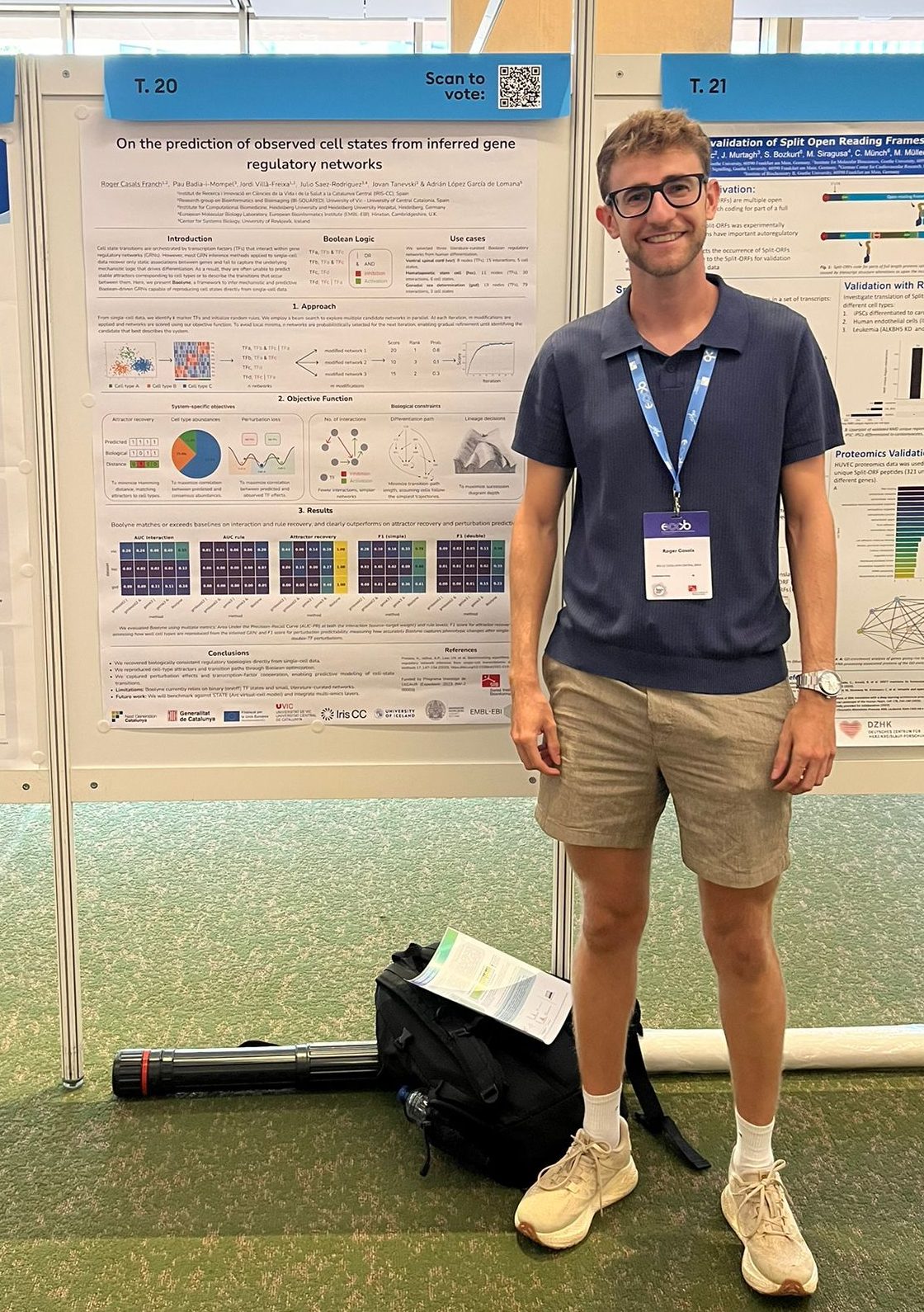
Roger Casals standing next to his poster on gene regulatory network inference at ECCB 2026
Roger Casals with poster T.20, “On the prediction of observed cell states from inferred gene regulatory networks,” at ECCB 2026.

He presented Boolyne, a framework for inferring gene regulatory networks (GRNs) directly from single-cell data. Most GRN inference methods only recover static associations between genes, so they can’t explain the mechanistic logic that drives how cells differentiate. Boolyne instead learns Boolean-driven networks that reproduce real cell states and the transitions between them, with the aim of building a genuinely predictive model—one that can anticipate how cells respond to perturbations rather than just describe what’s already been observed.
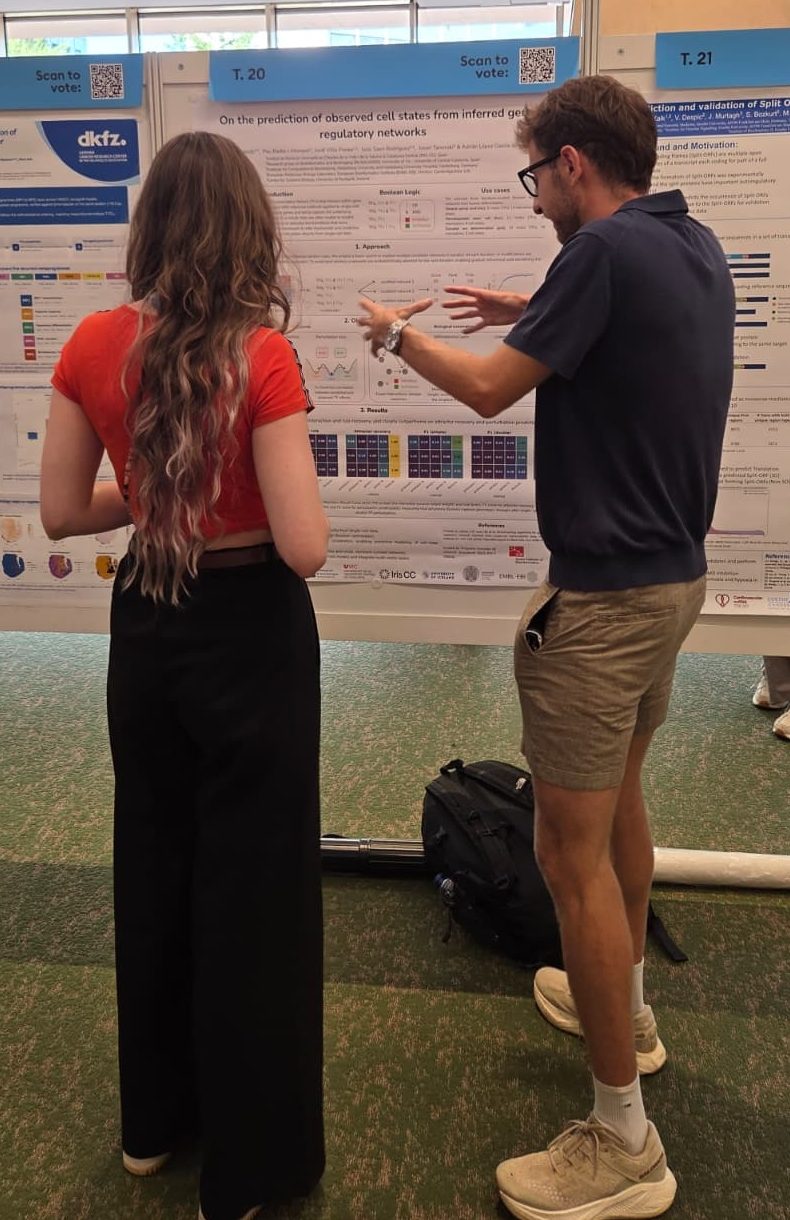
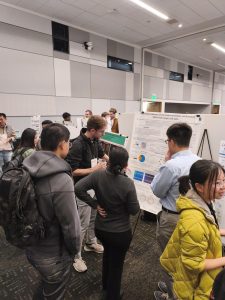
Roger Casals discussing his poster with a colleague during the ECCB 2026 poster session
Discussing Boolyne with a fellow attendee during the poster session.

Beyond the results, events like ECCB are a valuable chance to exchange ideas with the wider community and bring new questions back to our research.

Work carried out with Pau Badia-i-Mompel, Jordi Villà-Freixa, Julio Saez-Rodriguez, Jovan Tanevski, and Adrián López García de Lomana (IRIS-CC · UVic-UCC · Heidelberg · EMBL-EBI · University of Reykjavík).

This latest result builds on Roger’s earlier work on gene regulatory networks and cell-state transitions from single-cell data, previously presented at scverse 2025 at Stanford, at the XV Bioinformatics Symposium (JBI2025), at the SEBiBC congress, and in the poster selected for the VHIO Award of Computing in Oncology.
Nayanika Das Presents Advances in GPX6 Catalysis at ACS Fall 2026

By |2026-09-01T09:33:30+00:00September 1, 2026|CBBL News, Conferences, PhD, Publications, Research|

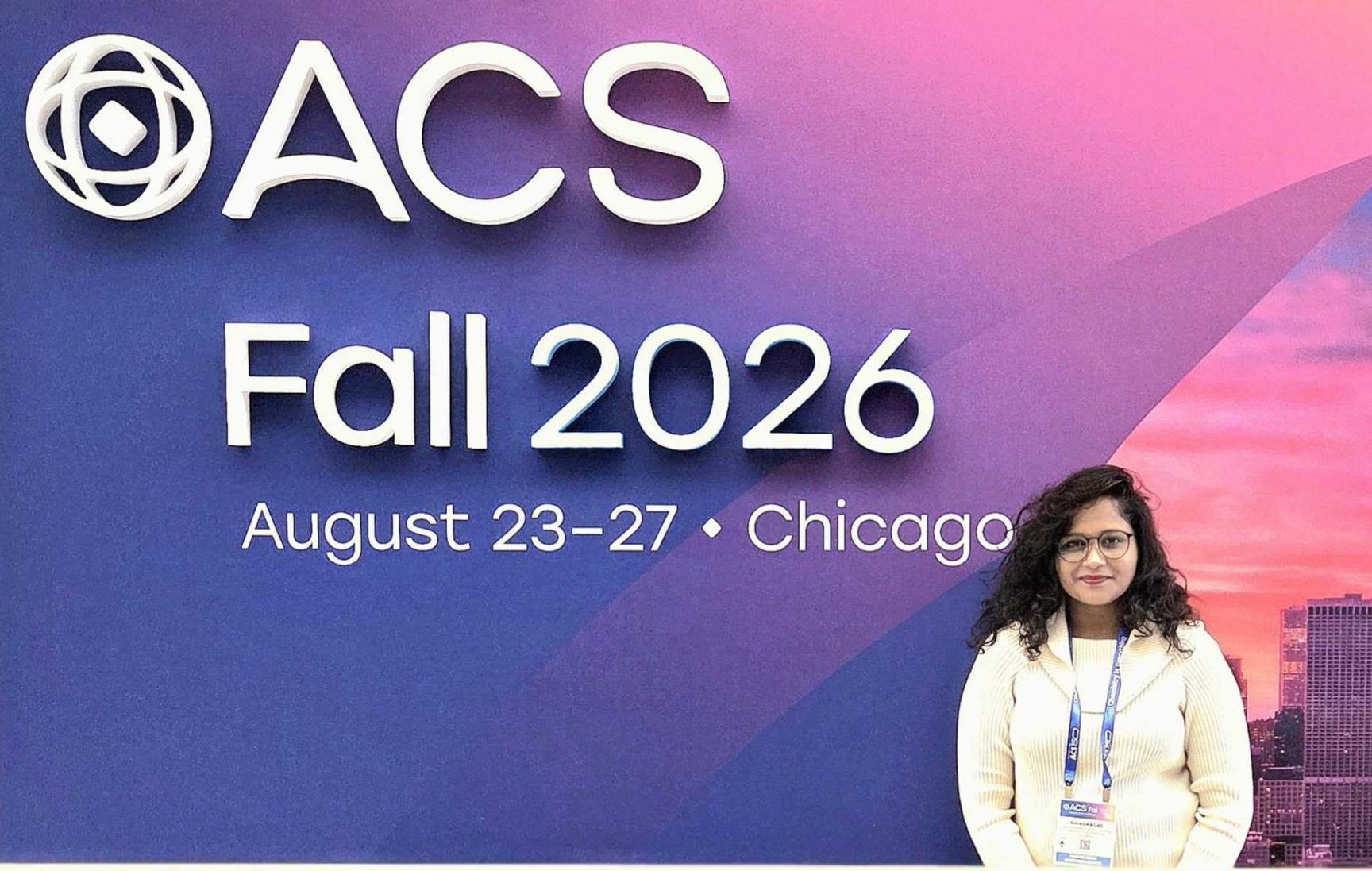
Our PhD researcher, Nayanika Das, presented her work at ACS Fall 2026, the American Chemical Society’s national meeting held in Chicago from August 23 to 27, 2026, during the in-person poster session of the Physical Chemistry (PHYS) Division.

Nayanika Das at the ACS Fall 2026 Chicago
Nayanika Das at ACS Fall 2026, Chicago (August 23–27, 2026).

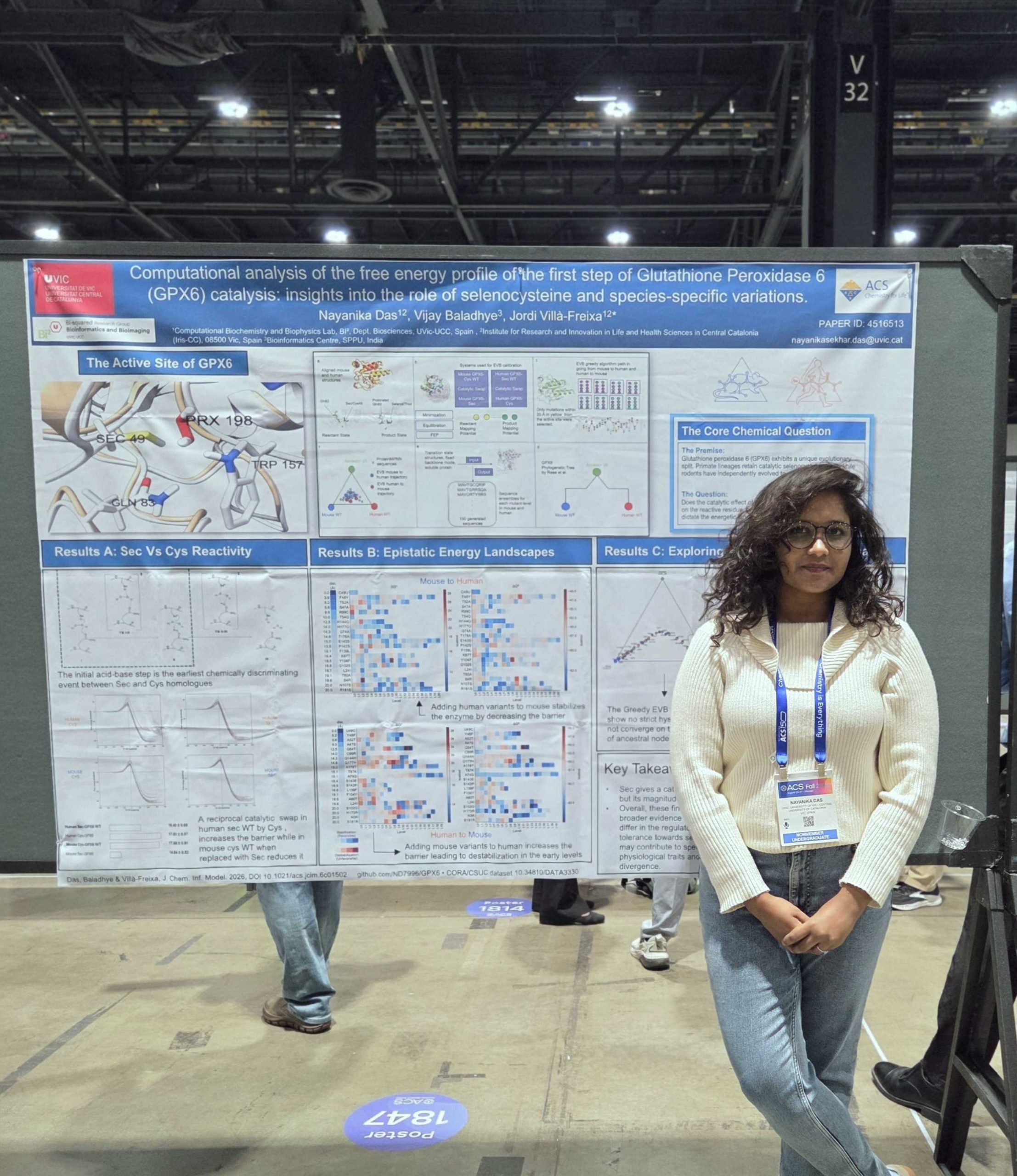
Her contribution, entitled “Computational Analysis of the Free Energy Profile of the First Step of Glutathione Peroxidase 6 (GPX6) Catalysis: Insights into the Role of Selenocysteine and Species-Specific Variations” (Poster 1847, Paper ID 4516513), explores the molecular and evolutionary factors influencing GPX6 catalysis.

Using computational free-energy calculations, the study investigates the role of the catalytic residue—selenocysteine (Sec) or cysteine (Cys)—and species-specific sequence variations. It further examines how interactions between mutations, or epistasis, can influence catalytic properties and contribute to protein evolution.

Nayanika Das next to her poster on GPX6 catalysis during the ACS Fall 2026 poster session
Presenting poster 1847 during the PHYS Division poster session.

The conference provided an excellent opportunity to share this research with an international scientific community and engage in discussions across computational chemistry, biochemistry, and molecular sciences.

The work presented builds on the lab’s related study on GPX6 catalysis, published in the Journal of Chemical Information and Modeling (DOI: 10.1021/acs.jcim.6c01502), with code and analysis openly available on GitHub and the underlying dataset deposited in the CORA/CSUC repository.

Nayanika’s participation in ACS Fall 2026 marks an important milestone in her doctoral research at the intersection of computational chemistry, protein catalysis, and molecular evolution. She gratefully acknowledges COZYME and IRIS-CC for providing the grants that made her participation possible.

Roger Casals presents his doctoral research at scverse 2025

By |2026-09-01T09:34:47+00:00December 1, 2025|CBBL News, Conferences, PhD|

Last November, Roger Casals, PhD candidate at the Computational Biochemistry and Biophysics Lab (CBBL), travelled to Stanford University to take part in scverse 2025, one of the key gatherings for the single-cell and multi-omics community.

During the conference, Roger presented a poster with some of the latest results from his PhD. His project focuses on building gene regulatory networks from single-cell data to understand cell state transitions, a line of work that is becoming increasingly important as we try to make sense of complex biological systems.

Beyond the science, the conference gave Roger the chance to meet many members of the scverse community, discuss ideas in person, and learn from researchers developing cutting-edge tools. Topics like agentic AI and virtual cell models were especially exciting, forecasting us where the field is heading.

Roger’s participation was possible thanks to a travel grant from the conference, along with support from the Department of Biosciences (FCTE), the BI-Squared Group, and IRIS-CC.


The CBBL at the JBI2025

By |2026-09-01T09:35:00+00:00October 24, 2025|CBBL News, Conferences, PhD|

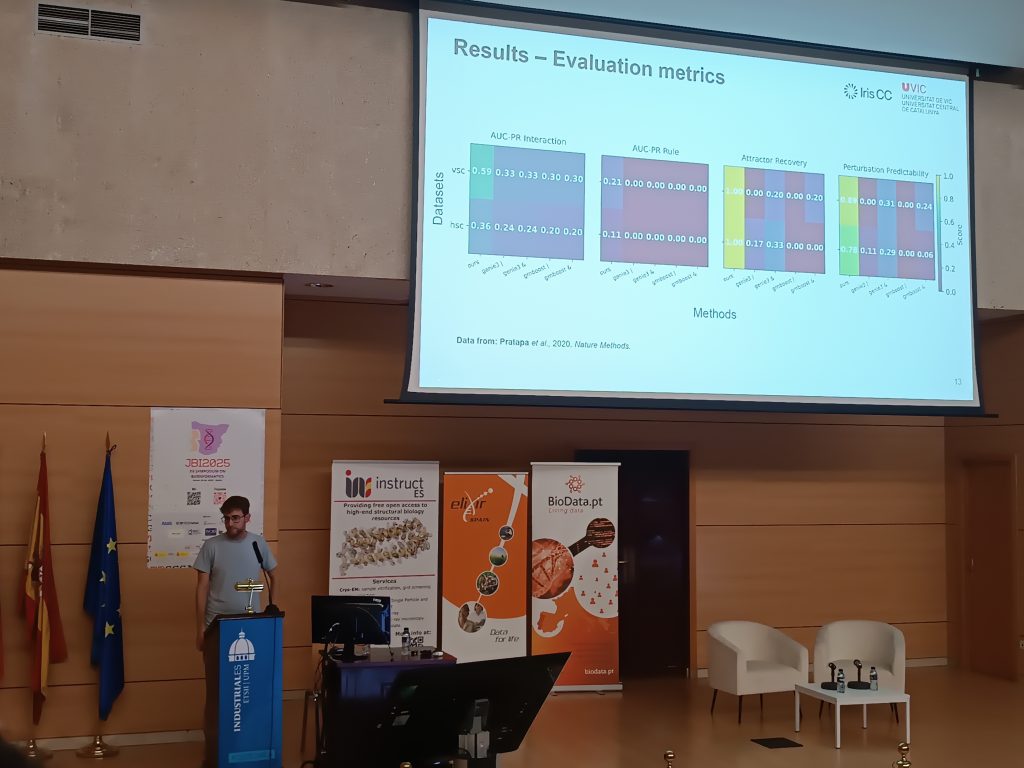
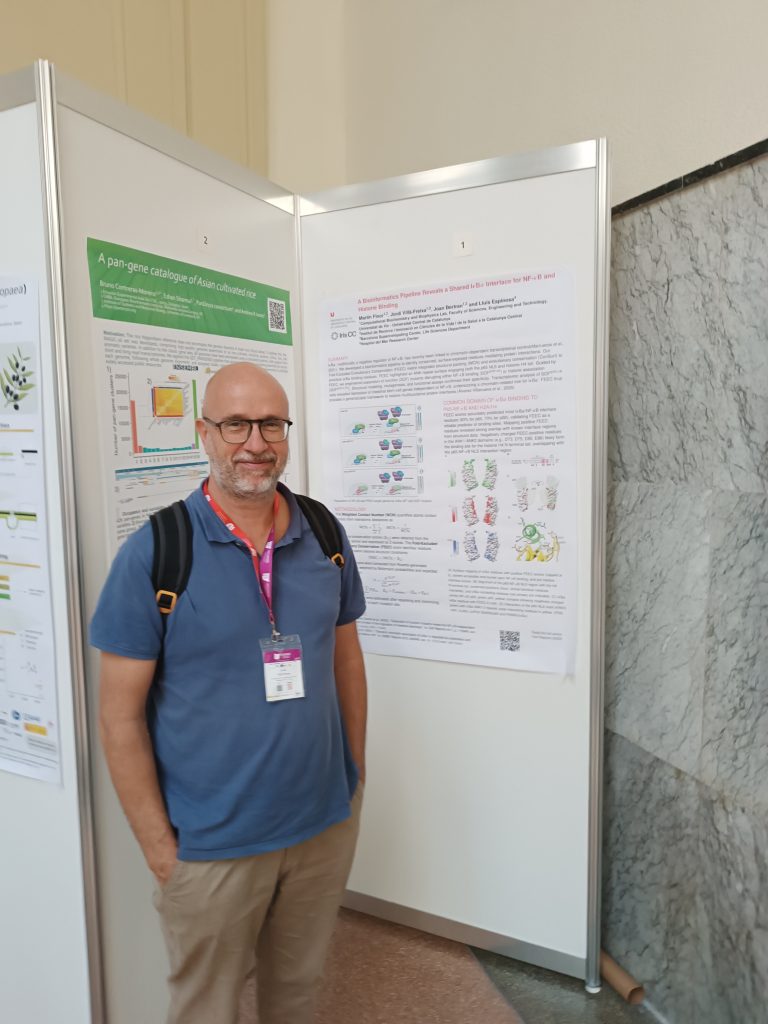
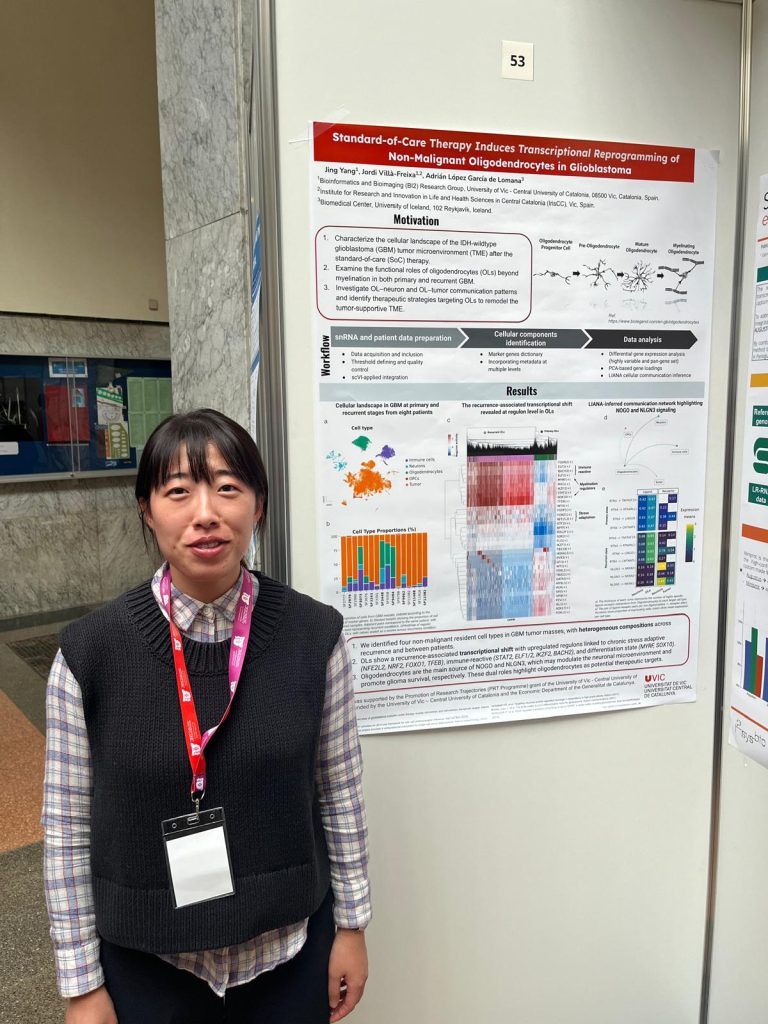
The CBBL was present in the XV Bioinformatics Symposium (JBI2025), that took place in Madrid on October 22nd-24th, hosted by the CNB/CSIC. The lab presented results on three research projects:

    • Topics Session #4 Single-Cell Omics. Talk by Roger Casals on “Mechanistic inference of cell state transitions via Boolean GRNs from single-cell data” Roger Casals Franch, Pau Badia-i-Mompel, Jordi Villà-Freixa, Julio Saez-Rodriguez, Jovan Tanevski, and Adrián López García de Lomana;

    • “A Bioinformatics Pipeline Reveals a Shared IκBα Interface for NF-κB and Histone Binding”, Martin Floor, Jordi Villà-Freixa, Joan Bertran and Lluís Espinosa; poster on the recent work published in Cell Reports; and
    • Standard-of-Care Therapy Induces Phenotypic Reprogramming of Non-Malignant Oligodendrocytes in Glioblastoma“, Jing Yang, Jordi Villà-Freixa and Adrián López García de Lomana.

Nayanika Das Presents Advances in Enzyme Evolution at the SEB International Congress

By |2026-09-01T09:35:32+00:00June 28, 2025|CBBL News, Conferences, PhD|

PhD student Nayanika Das participated in the 18th International Congress of the Spanish Biophysical Society, held from June 24 to 27, 2025, at the Faculty of Chemistry of the Complutense University of Madrid. This event, organized by the Spanish Biophysical Society, brings together scientists from various disciplines and stages of their research careers to explore cutting-edge topics in the field of biophysics.

During the congress, Nayanika presented her results in poster format, entitled: “Exploring the Evolutionary Dynamics between GPX6 Orthologs and Comparing Their Catalytic Efficiency Using Empirical Valence Bond (EVB) Calculations.” Her work shows why the substitution of selenocysteine with cysteine in GPX6 significantly reduces catalytic efficiency, supporting the proposed mechanistic hypothesis, and it also extends the analysis to explore the energy landscape of cummulative mutations between Sec- and Cys- containing GPX6 proteins in nature. Thus, using a greedy algorithm, key mutations with lower activation barriers were identified that could stabilize the enzyme and offer an energetically favorable evolutionary path between homolog proteins.

Roger Casals presents his immunotherapy research at the SEBiBC congress

By |2026-09-01T09:36:04+00:00October 19, 2024|CBBL News, Conferences, PhD|

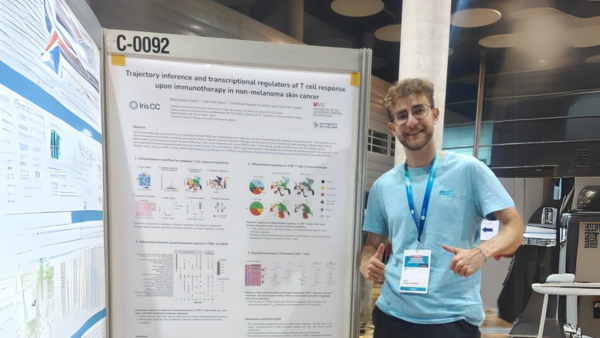
Roger Casals has participated in the first congress of the Spanish Society of Bioinformatics and Computational Biology (SEBiBC), presenting the poster entitled “Trajectory inference and transcriptional regulators of T cell response upon immunotherapy in non-melanoma skin cancer”. The congress, held at the Fira de Valencia from October 16 to 18, brought together prominent researchers in the field of bioinformatics and computational biology, consolidating itself as a success in its first edition.

In his presentation, Casals presented the results of a study that allows mapping the differentiation trajectories of T cells in the tumor microenvironment. Through a comprehensive functional analysis, the work identifies key transcription factors in the modulation of the immune response after immunotherapy in cases of non-melanoma skin cancer. These findings may be a basis for better understanding the mechanisms of response to immunotherapy, opening doors to future personalized therapies.

The work of Roger Casals has been possible thanks to the collaboration with Lara Nonell, expert in bioinformatics from the Vall d’Hebron Institute of Oncology (VHIO), as well as with the support of her doctoral co-tutors, Adrián López García de Lomana from the University of Iceland and Jordi Villà-Freixa.

Roger Casals, selected to present a poster for the Award of Computing in Oncology (VHIO)

By |2026-09-01T09:37:01+00:00February 22, 2024|CBBL News, Conferences, PhD|

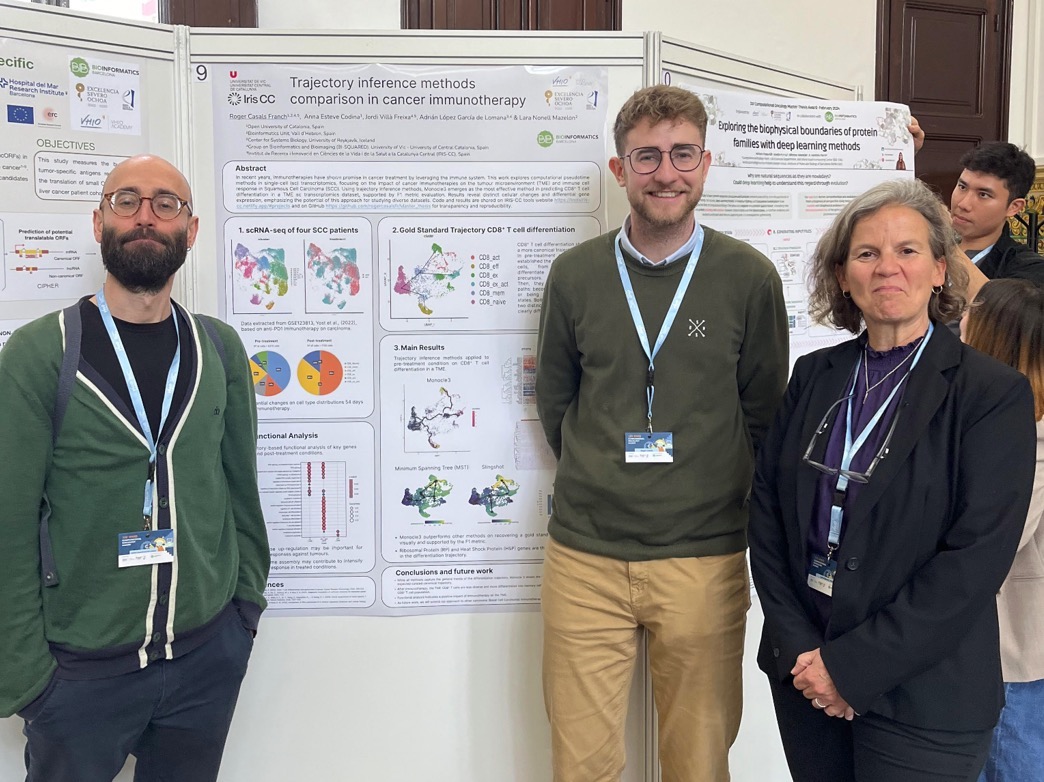
Roger Casals, UVIC-UCC PhD student in the Bioinformatics program and member of the CBBL, was selected to present the poster “Trajectory Inference Methods Comparison in Cancer Immunotherapy” at the first edition of the Award of Computing in Oncology, organized by the Vall d’Hebron Institute of Oncology (VHIO).

The contest was held on February 21, 2024 at the Casa Convalescència in Barcelona and was a meeting to recognize the best master’s thesis in computational science at national level.

Roger works in the analysis of “single-cell” transcriptomics data, which allows analyzing gene expression at scale individual cells, revealing crucial details about biology.

This work has been supervised by Lara Nonell i Mazelon (VHIO), Jordi Villà i Freixa (UVic-UCC / IRIS-CC) and Adrián López García de Lomana (UVic-UCC, HI), and has had the support of the “Programa Investigo AGAUR” (2023 INV-200003TG1) at as a technologist at the IRIS-CC.

Nayanika Das presents a poster at RQTC/SCQ on recent work in GPX6 evolution and activity

By |2026-09-01T09:37:31+00:00February 1, 2023|CBBL News, Conferences|

In a recent work coordinated by Sergi Castellano (UCL), and in collaboration with Elias Arnér research group (Karolinska), we have investigated the phylogeny of Glutathione Peroxydase 6 (GPX6) and evaluated the effect of Cys/Sec variants in the loss/gain of its peroxidase activity and glutathione binding. In this poster, Nayanika presents her PhD project (cosupervised by Prof. Vijay Baladhye, Savitribai Phule Pune University) on the evaluation of the enzymatic activity of the protein in relation to its evolutionary history, grounded by the recent paper, that also included our former member Martin Floor. The presentation took place during the 1st meeting on Theoretical and Computational Chemistry by the Catalan Chemistry Society. Exciting PhD project ahead!

#CienciaSMW

By |2026-09-01T09:38:59+00:00February 21, 2014|CBBL News, Conferences|

Jordi Villà-Freixa, invited speaker at the event on “Internet i les eines de social media en la comunicació de la ciència”, during the 2014 Social Media Week at the Centre de Cultura Contemporània de Barcelona (CCCB).

In recent years the Internet and social networks have rapidly become part of many aspects of our daily lives. Facebook, Twitter, Google+, YouTube… make it easier to stay in touch with family and friends, join conversations of interest online and have access to more audiovisual material than there are hours in the day to watch’ l! Its ability to quickly spread and amplify content and to do so in an informal environment means that the Internet and social networks have become powerful tools to use in a professional context and also to attract and involve people in different causes.

The Web is today the great platform for researching scientific information, both specialized and dissemination. However, most scientists are yet to use these platforms to communicate their research. In this sense, science communicators can also make great use of it, beyond the online portals of the media where they work or the blogs where they publish their articles. It is in recent years that Facebook and Twitter have begun to be used as tools for the promotion and dissemination of their work or scientific information of general interest.

How to communicate science to society through the Internet and which ways to use to take advantage of the full potential of the Web remains a field that needs to be explored and exploited with more knowledge and tools.

This is why the Secretariat of Universities and Research of the Generalitat de Catalunya has organized a conference  as part of Social Media Week Barcelona (#SMWBCN). Coinciding with the commemoration of the three hundredth anniversary of the events of 1714, this day is included in the Tricentenary programme. The commemoration, launched by the Generalitat de Catalunya under the slogan “Érem.Som.Serem”, wants to transcend the historical perspective and is presented as an opportunity to share spaces for reflection and dialogue that allow us to jointly rethink a future project.

The conference brought together experts from companies such as Google, Yahoo and the BBC as well as working scientists, journalists specializing in science, university and research center communications managers to discuss the following issues:

  • How can you create attractive, potentially viral content on the Internet?
  • What are the formats with the most possibilities for disseminating science on the Web? it is everything invented on the internet or is there still room for innovation? What are the future trends?
  • What possibilities do Twitter, Facebook, YouTube… offer to communicate science? How can you get the most out of it to build a name on the Internet?
  • How can a platform like Facebook help create and position a brand a Internet? How can it benefit a research center to disseminate its work and obtain funding for future projects?

PROGRAM


SMWBCN2014.key

Go to Top