

Every year, the UN’s International Translation Day reminds us that language is much more than a tool for communication. Indeed, this year’s theme focuses on “Linguistic Diversity and Language Rights” highlighting an issue that is becoming increasingly important in our multilingual world, that access to communication should be a right, not a privilege.
Interpreters play a particularly important role in making this right a reality. Imagine arriving at a hospital, court, school or government office where nobody speaks your language. The information, help, and advice you need may be available, but without an interpreter, it can remain inaccessible. In situations involving healthcare or justice, misunderstanding can have serious consequences.
This is why interpreting is not simply about exchanging words and grammar between languages. A professional interpreter must communicate meaning, tone, intention and cultural context accurately, often under considerable pressure. Interpreters help people participate in situations where their own voice and cultural means of communication might otherwise be misunderstood or lost, and in some cases with potentially serious life-changing consequences.
The issue becomes even more interesting when we consider artificial intelligence. Translation technologies are developing rapidly and can make communication across languages easier and faster (and potentially lazier). However, technology does not benefit all languages equally. Languages with large amounts of digital data (based on Large Language Models) tend to receive better technological support, while many minority, indigenous, and less-resourced languages remain underrepresented. FIT (International Federation of Translators) has specifically highlighted this gap in connection with this year’s theme. This raises an important question about whether technology can really promote linguistic diversity, and support human rights broadly, if some languages are left behind.
Human interpreters remain essential because they bring something technology cannot guarantee, informed professional judgement, ethical responsibility, and an understanding of people, communities, and cultures. Their work can help ensure that linguistic diversity is not treated as an obstacle, but as something valuable, and deserving of understanding and protection.
In the end, being understood is about more than hearing the correct words. It is about having the opportunity to participate, make decisions, and have one’s voice heard and respected. We should recognise interpreters not simply as language professionals, but as bridges between peoples, cultures and human rights, and AI technologies as aides in this process, but never as substitutes. In this sense, studying translation and interpreting is far more than learning another language, it is a deeply human exploration of culture and intercommunication. It is about developing sensitivities about different perspectives and beliefs on life and representing them across linguistic and cultural barriers in the service of universal human rights.
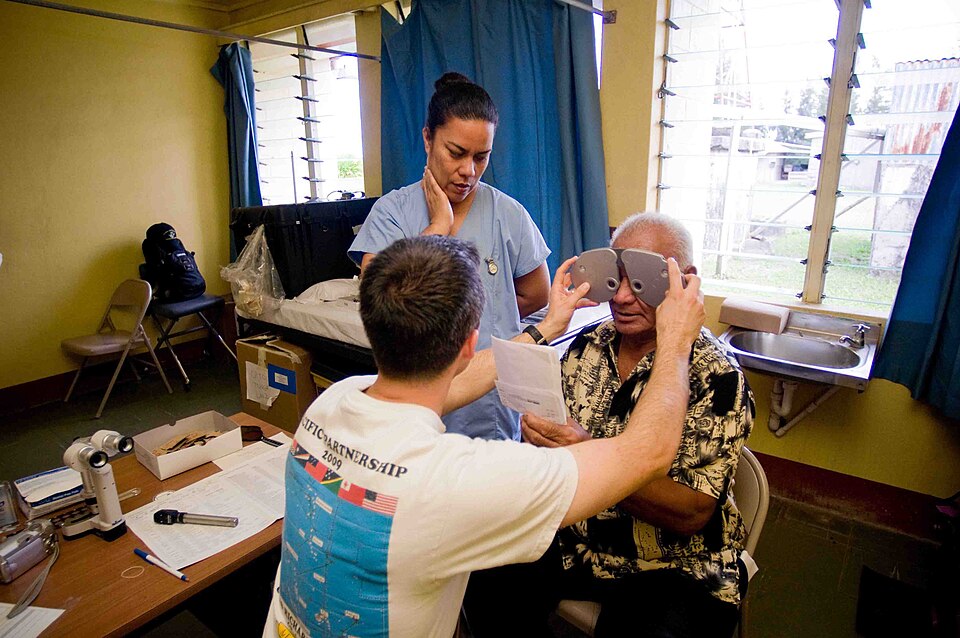
Tongan interpreter helps an optometrist to conduct an eye exam for a local man during a Pacific Partnership 2009 Medical Civic Action Project (MEDCAP) site held at Niu’ui Hospital.
Discover more from TradUVic
Subscribe to get the latest posts sent to your email.


Leave A Comment