Category Archives: CBBL News

Roger Casals co-authors a Benchmarking study on Multimodal Gene Regulatory Networks

Posted by 27 de December de 2024

We are thrilled to announce the publication of a new preprint, “Comparison and evaluation of methods to infer gene regulatory networks from multimodal single-cell data”, led by Pau Badia-i-Mompel as the first author, with contributions from Roger Casals and the Saez-Lab team.

In this work, we present Gene Regulatory nETwork Analysis (GRETA), a comprehensive framework designed to infer, compare, and evaluate gene regulatory networks (GRNs). Using GRETA, we benchmarked both multimodal and unimodal GRN inference methods, setting a foundation for future advancements in the field.

GRETA graphical abstract

This preprint is an important step in understanding multiomic gene regulatory networks and reflects the collaborative efforts of the Saez-Lab, under the leadership of Julio Saez-Rodriguez.

Check out the results and tools here:

If you want to stay updated or join the discussion, check out our announcement on BlueSky.


Roger Casals presents his immunotherapy research at the SEBiBC congress

Posted by 19 de October de 2024

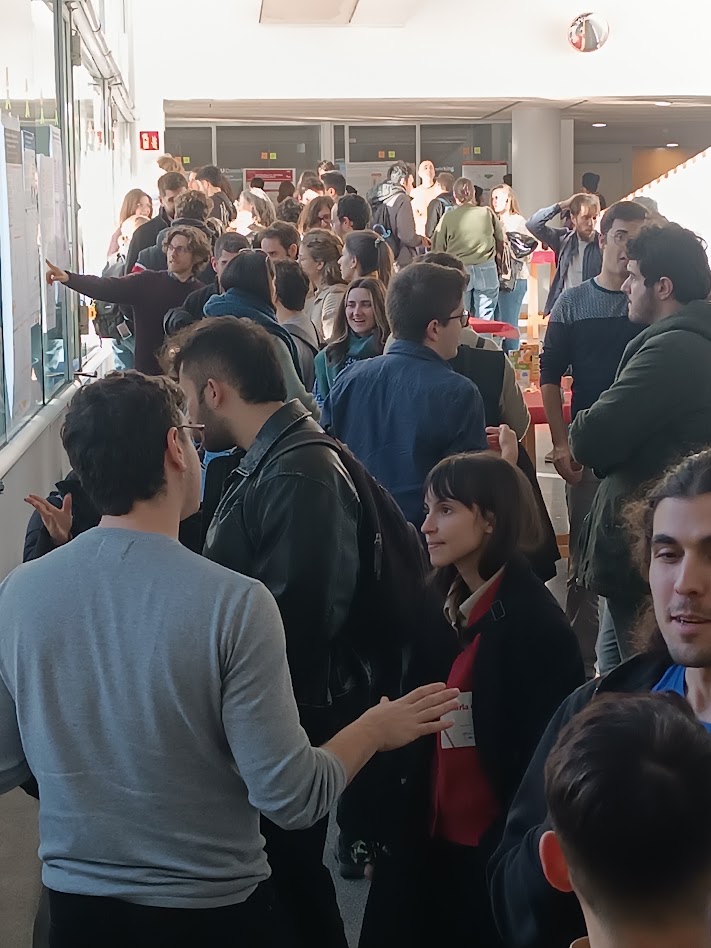
Roger Casals has participated in the first congress of the Spanish Society of Bioinformatics and Computational Biology (SEBiBC), presenting the poster entitled “Trajectory inference and transcriptional regulators of T cell response upon immunotherapy in non-melanoma skin cancer”. The congress, held at the Fira de Valencia from October 16 to 18, brought together prominent researchers in the field of bioinformatics and computational biology, consolidating itself as a success in its first edition.

In his presentation, Casals presented the results of a study that allows mapping the differentiation trajectories of T cells in the tumor microenvironment. Through a comprehensive functional analysis, the work identifies key transcription factors in the modulation of the immune response after immunotherapy in cases of non-melanoma skin cancer. These findings may be a basis for better understanding the mechanisms of response to immunotherapy, opening doors to future personalized therapies.

The work of Roger Casals has been possible thanks to the collaboration with Lara Nonell, expert in bioinformatics from the Vall d’Hebron Institute of Oncology (VHIO), as well as with the support of her doctoral co-tutors, Adrián López García de Lomana from the University of Iceland and Jordi Villà-Freixa.

Workshop on AI Applications in Biomedical Sciences

Posted by 11 de October de 2024

The Bioinformatics and Bioimaging research area of the IRIS-CC and the Bi-Squared Research Group for Bioinformatics and Bioimaging (BI2) are pleased to announce the AI Applications in Biomedical Sciences workshop. The event will take place on Friday, November 15, 2024, at the Faculty of Medicine, UVIC-UCC (Can Baumann).

The workshop, which is free of charge, will run from 10:00 AM to 1:00 PM and will feature discussions on the latest advancements and applications of machine learning and artificial intelligence in the field of biomedical sciences.

Participants are required to register in advance for organizational purposes. For more information and to access the event program, visit the event page: AI Applications in Biomedical Science.

Event Details:

  • Date: November 15, 2024
  • Time: 10:00 AM – 1:00 PM
  • Location: Faculty of Medicine, UVIC-UCC, Can Baumann
  • Registration: Free, but mandatory through this form

Co-organized by


Visit of professor Yuk Sham, University of Minnesota

Posted by 6 de September de 2024

Professor Yuk Sham visits the CBBL for a collection of meetings and seminar.

Professor Sham is an expert in molecular simulations, in particular protein-protein and protein-ligand interactions. The work of his laboratory focuses on tools conducting to the rational discovery of drugs, and has a long trajectory in the field of computational biochemistry. During his visit, the current research projects of the CBBL and the ShamLab were explored, in search of synergies and possible collaborations.

New undergrad students in the lab

Posted by 18 de May de 2024

This late spring, Anna Moya Mujal and David Bedoya Rivera, undergrad students in Biotechnology, have joined our lab to complete their practical training.

Anna has bee working under the supervision of PhD student Roger Casals to set up a protocol in R for cell type labelling and clustering from single cell RNAseq data. Results are avaliable in github.

David have been focussing on testing the use of Markov Models in classifying molecular dynamics simulations, and helping this way our students Pau Domínguez, Ade Raissa and Nayanika Das to progress in their respective projects.

Roger Casals, selected to present a poster for the Award of Computing in Oncology (VHIO)

Posted by 22 de February de 2024

Roger Casals, UVIC-UCC PhD student in the Bioinformatics program and member of the CBBL, was selected to present the poster “Trajectory Inference Methods Comparison in Cancer Immunotherapy” at the first edition of the Award of Computing in Oncology, organized by the Vall d’Hebron Institute of Oncology (VHIO).

The contest was held on February 21, 2024 at the Casa Convalescència in Barcelona and was a meeting to recognize the best master’s thesis in computational science at national level.

Roger works in the analysis of “single-cell” transcriptomics data, which allows analyzing gene expression at scale individual cells, revealing crucial details about biology.

This work has been supervised by Lara Nonell i Mazelon (VHIO), Jordi Villà i Freixa (UVic-UCC / IRIS-CC) and Adrián López García de Lomana (UVic-UCC, HI), and has had the support of the “Programa Investigo AGAUR” (2023 INV-200003TG1) at as a technologist at the IRIS-CC.

Polyrate 2023: new version announcement

Posted by 8 de September de 2023

Polyrate is a suite of computer programs for the calculation of chemical reaction rates of polyatomic species (including atoms and diatoms as special cases) by variational transition state theory (VTST); conventional transition state theory is also supported. The Polyrate suite has been developed by Donald Truhlar and coworkers for several decades and it is the reference tool for the calculation of both bimolecular reactions and unimolecular reactions, and it can be applied to reactions in the gas phase, liquid solution phase, or solid state and to reactions at gas–solid interfaces.

The participation of the members of the CBBL in the program was in the development of the re-orientation of the dividing surface (RODS) [1,2] algorithm that allow VTST calculations with larger step sizes.

[1] J. Villà, D.G. Truhlar, Theor. Chem. Acc. 97 (1997) 317-323, https://doi.org/10.1007/s002140050267.

[2] A. González-Lafont, J. Villà, J.M. Lluch, J. Bertrán, R. Steckler, D.G. Truhlar, J. Phys. Chem. A 102 (1998) 3420-3428, https://doi.org/10.1021/jp9807672.

REF:

Meana-Pañeda, Rubén; Zheng, Jingjing; Bao, Junwei Lucas; Zhang, Shuxia; Lynch, Benjamin J.; Corchado, José C.; Chuang, Yao-Yuan; Fast, Patton L.; Hu, Wei-Ping; Liu, Yi-Ping; Lynch, Gillian C.; Nguyen, Kiet A.; Jackels, Charles F.; Fernández-Ramos, Antonio; Ellingson, Benjamin A.; Melissas, Vasilios S.; Villà, Jordi; Rossi, Ivan; Coitiño, Elena L.; Pu, Jingzhi; Albu, Titus V.; Zhang, Rui Ming; Xu, Xuefei; Ratkiewicz, Artur; Steckler, Rozeanne; Garrett, Bruce C.; Isaacson, Alan D.; Truhlar, Donald G.

Polyrate 2023: A computer program for the calculation of chemical reaction rates for polyatomics. New version announcement Journal Article

In: Computer Physics Communications, vol. 294, pp. 108933, 2024, ISSN: 0010-4655.

CDK6 is activated by the atypical cyclin I to promote E2F‐mediated gene expression and cancer cell proliferation

Posted by 1 de June de 2023

A paper has been just published in Molecular Oncology in a collaboration led by our colleagues Josep Clotet and Mariana P. Ribeiro (UIC Barcelona) on the interaction of CDK6 with the atypical cyclin I. The CBBL has contributed with molecular modelling analysis of the interface region. Martin Floor and Pau MArc Muñoz, past members of the CBBL, did all the computational work.

Abstract: Cyclin-dependent kinases (CDKs), together with their cyclin partners, are the master cell cycle regulators. Remarkably, the cyclin family was extended to include atypical cyclins, characterized by distinctive structural features, but their partner CDKs remain elusive. Here, we conducted a yeast two-hybrid screen to identify new atypical cyclin–CDK complexes. We identified 10 new complexes, including a complex between CDK6 and cyclin I (CCNI), which was found to be active against retinoblastoma protein. CCNI upregulation increased the proliferation of breast cancer cells in vitro and in vivo, with a magnitude similar to that seen upon cyclin D upregulation, an effect that was abrogated by CDK6 silencing or palbociclib treatment. In line with these findings, CCNI downregulation led to a decrease in cell number and a reduction in the percentage of cells reaching S phase. Finally, CCNI upregulation correlated with the high expression of E2F target genes in large panels of cancer cell lines and tissue samples from breast cancer patients. In conclusion, we unveil CCNI as a new player in the pathways that activate CDK6, enriching the wiring of cell cycle control..

Open position within the INVESTIGO program

Posted by 19 de April de 2023

A 2 years position within the framework of the INVESTIGO call is now open in the Bioinformatics and Bioimaging research area of the Institut de Recerca i Innovació en Ciències de la Vida i la Salut a la Catalunya Central (IRIS-CC).

Our lab is currently developing a new line on multiomics data analysis, in particular in the interaction between transcriptomics and metabolomics, to understand the dynamics of gene regulation in different tissues and cell types. The candidate (limit of 30 years old, see also other constraints in the specific call below) will have strong programming skills (Python/R), training in Biostatistics, Bioinformatics or related subjects at the level of BSc/MSc and specific interest in massive biological data analysis by means of machine learning techniques.

The work will be carried out in close collaboration with Adrián López García de Lomana (University of Iceland). Working place is the Faculty of Sciences, Technology and Engineering at the UVic-UCC.

Check the details (in Catalan) of the selection process in this file.

Deadline, May 3rd, 2023

Nayanika Das presents a poster at RQTC/SCQ on recent work in GPX6 evolution and activity

Posted by 1 de February de 2023

In a recent work coordinated by Sergi Castellano (UCL), and in collaboration with Elias Arnér research group (Karolinska), we have investigated the phylogeny of Glutathione Peroxydase 6 (GPX6) and evaluated the effect of Cys/Sec variants in the loss/gain of its peroxidase activity and glutathione binding. In this poster, Nayanika presents her PhD project (cosupervised by Prof. Vijay Baladhye, Savitribai Phule Pune University) on the evaluation of the enzymatic activity of the protein in relation to its evolutionary history, grounded by the recent paper, that also included our former member Martin Floor. The presentation took place during the 1st meeting on Theoretical and Computational Chemistry by the Catalan Chemistry Society. Exciting PhD project ahead!