

Authors: Masó-Albareda, C*; Ferrer-Solà, M; Casals-Zorita, M; Palacio-Arronis, N; Espaulella-Panicot, J; Otero-Viñas, M.
Journal of Vascular Nursing. 2026
Abstract
Objective: No-option for revascularisation Chronic Limb-Threatening Ischaemia (CLTI) is often a terminal diagnosis for older patients, leading to survival and limb preservation rates that are of concern, as it frequently results in amputation and increased mortality. This study aimed to describe the clinical outcomes of wounds in patients with no-option CLTI treated with punch skin grafting (PSG), a partial-thickness skin transplantation procedure.
Method: This clinical case series included patients with no-option for revascularisation CLTI ulcers from an intermediate-hospital Wound Care Unit (WCU). Patient data were obtained using historical electronic records. Information on socio-demographics, wound characteristics, pain and quality of life was collected.
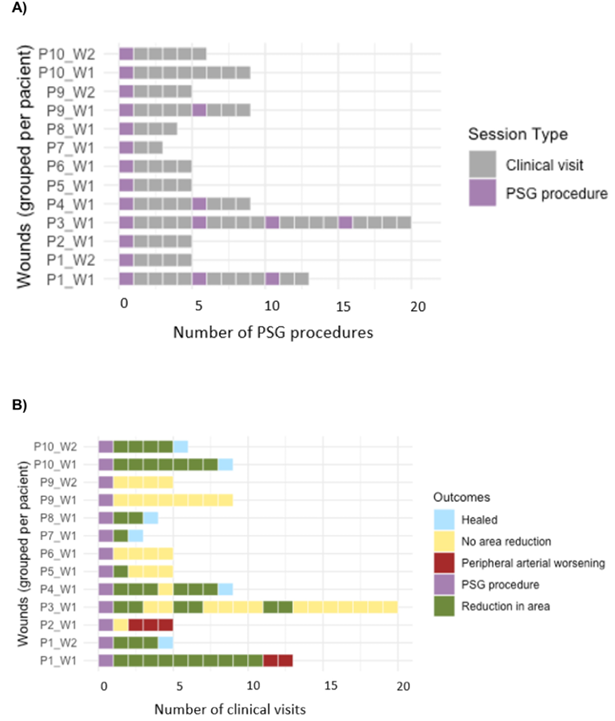
Results: A total of 10 patients with 13 wounds were included; 7 (70%) were female; the mean age was 84.5 years old (SD10.3). After one year of follow-up, survival reached 60% and major amputations were limited to 2 patients (20%); both events were post-PSG. Mean Frail-VIG score was 0.26 (SD0.08). Wound outcomes were as follows: 6 wounds achieved complete healing (mean time to closure: 5 weeks, SD 2.3), 3 wounds showed wound-area reduction, 3 showed no measurable improvement, and 1 worsened due to CLTI progression. Of the 6 healed wounds, 2 recurred and 1 patient developed a new ulcer during follow-up. Improvement of Wound-QoL-17 scores was observed in all assessed patients.
Conclusion: PSG represents a promising palliative therapeutic option for treating wounds in patients with no-option for revascularisation CLTI. Holds potential benefits for improving quality of life, ulcer reduction and healing and helps preserve limbs in octogenarians.








Leave A Comment