The Determinants of Arrhythmogenesis research line is led by Ph.D. Elisabet Selga Coma. Our team is devoted to deciphering the clinical, genetic, and lifestyle factors that influence cardiac health outcomes. We bring together our clinical and molecular expertise to delineate a comprehensive picture of arrhythmogenic events with emphasis in their etiology and potential treatments.
Our current focus is, on one side, on establishing the more prevalent risk factors associated with unexplained sudden cardiac death and the role of mental pathologies in this context. On the other side, we aim to shed light on the multidimensional nature of atrial fibrillation by integrating knowledge on the major clinical, biochemical, microbial and molecular determinants leading to this pathology. We also seek to design non-pharmacologic programs to reduce atrial fibrillation burden and to improve quality of life of overweight/obese patients.

Team
Our last happenings
TR2Lab Joins Global Experts at the ERS International Congress 2026
Dr. Renata Da Palma, member of TR2Lab, participated in the ERS International Congress 2026 held in Barcelona, one of the world's largest and most influential meetings in respiratory medicine and science. During the event, she presented TR2Lab’s research on the anti-inflammatory effects of photobiomodulation therapy in an experimental model of [...]
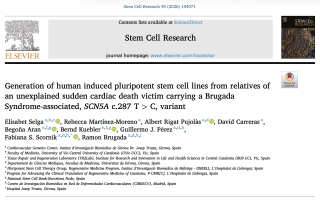
Generation of human induced pluripotent stem cell lines from relatives of an unexplained sudden cardiac death victim carrying a Brugada Syndrome-associated, SCN5A c.287 T>C, variant
Authors: Elisabet Selga, Rebecca Martínez-Moreno, Albert Rigat Pujolàs, Begoña Aran, Bernd Kuebler, Guillermo J. Pérez, Fabiana S. Scornik *, Ramon Brugada Stem Cell Research. 2026 DOI:10.1016/j.scr.2026.104071 Read More Abstract Patient-derived induced pluripotent stem cells (hiPSC) are a valuable approach to model cardiovascular diseases. We nucleofected non-integrating episomal vectors [...]
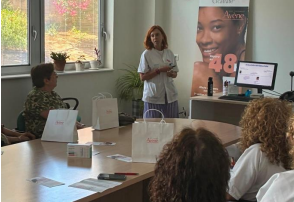
Maria José Gil’s Commitment to Advancing Wound Care Education
Beyond her research activity within TR2Lab, PhD candidate Maria José Gil has played an active role this year in training healthcare professionals across several educational initiatives in the field of wound care, reaching nurses, nursing residents, and healthcare assistants throughout different regions. FOCUSS Training Programmes (IACS) Maria José coordinated and [...]