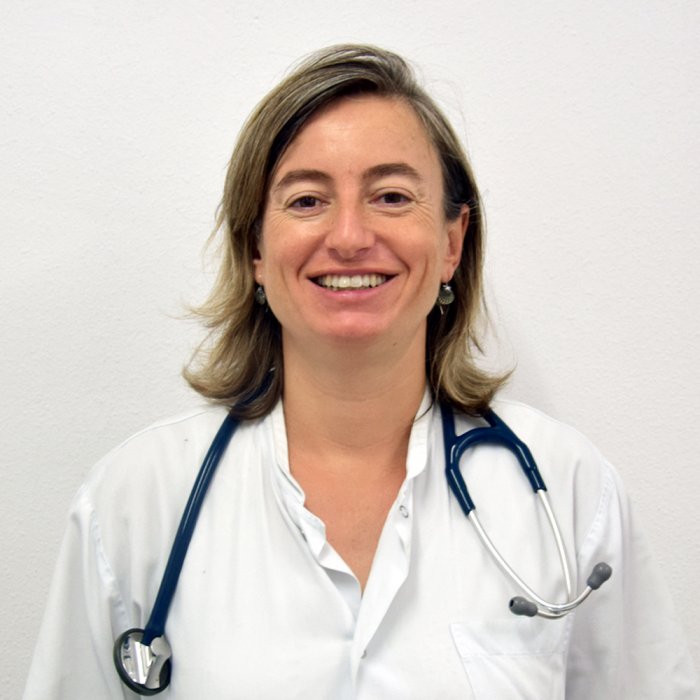
Lídia Carballeira Pol
Member of the Determinants of Arrhythmogenesis Research Line
Email: lidia.carballeira@umedicina.cat or lcarballeira@chv.cat
ORCID: 0000-0001-9819-4269
Scientific Profile: URECERCA
Dra. Lidia Carballeira is a Cardiology Specialist at the Consorci Hospitalari de Vic, with advanced expertise in cardiac electrophysiology and device therapy. She trained as a cardiologist at Hospital de la Santa Creu i Sant Pau (Barcelona), where she developed a strong interest in arrhythmias and sports cardiology, completing early research on electrocardiographic alterations in elite athletes, particularly early repolarization patterns.
She subsequently pursued subspecialized electrophysiology training at Hospital de Sant Pau and the Central University Hospital of Asturias—one of Spain’s most active EP centers—achieving European Level‑2 Certifications in Cardiac Electrophysiology and Cardiac Devices in 2017.
Her research career expanded with a competitive post‑residency fellowship funded by the Spanish Society of Cardiology at the Hospital of the University of Pennsylvania (USA), where she investigated clinical and electrical predictors of premature ventricular contraction–induced cardiomyopathy. This experience further strengthened her commitment to translational electrophysiology.
Dra. Carballeira has contributed several international publications in leading electrophysiology journals.. Her work spans ventricular arrhythmias, early repolarization in athletes, complex ablation strategies, conduction system pacing, and arrhythmia outcomes in neuromuscular disease.
She is also involved in medical education, teaching at the Faculty of Medicine of the University of Vic, where she contributes to training in cardiac arrhythmias through problem‑based learning and clinical simulation.
Currently, Dra. Carballeira is pursuing her PhD at the University of Vic–Central University of Catalonia (UVic‑UCC), focusing on atrial fibrillation and the pathophysiological mechanisms involved in preventing atrial myopathy through cardiac rehabilitation—a line of work aligned with her long‑standing interest in integrating clinical electrophysiology, preventive cardiology, and translational research.
My last happenings:
TR2Lab Joins Global Experts at the ERS International Congress 2026
Dr. Renata Da Palma, member of TR2Lab, participated in the ERS International Congress 2026 held in Barcelona, one of the world's largest and most influential meetings in respiratory medicine and science. During the event, she presented TR2Lab’s research on the anti-inflammatory effects of photobiomodulation therapy in an experimental model of asthma-COPD overlap. The congress brought together researchers, clinicians, and healthcare professionals from across the globe to share the latest advances in respiratory health, fostering scientific exchange and international collaboration. Scientific meetings such as ERS play an essential role in advancing research by facilitating knowledge sharing, promoting innovation, and creating new [...]
Generation of human induced pluripotent stem cell lines from relatives of an unexplained sudden cardiac death victim carrying a Brugada Syndrome-associated, SCN5A c.287 T>C, variant
Authors: Elisabet Selga, Rebecca Martínez-Moreno, Albert Rigat Pujolàs, Begoña Aran, Bernd Kuebler, Guillermo J. Pérez, Fabiana S. Scornik *, Ramon Brugada Stem Cell Research. 2026 DOI:10.1016/j.scr.2026.104071 Read More Abstract Patient-derived induced pluripotent stem cells (hiPSC) are a valuable approach to model cardiovascular diseases. We nucleofected non-integrating episomal vectors in skin fibroblasts of four family members. Two of them carried the single nucleotide variant (SNV) SCN5A_c.287 T >C, leading to NaV1.5_p.L96P, and two were non-carrier family members. The resulting hiPSC cell lines differentiate into cells of the 3 germ layers, display normal karyotypes and express markers of the undifferentiated [...]
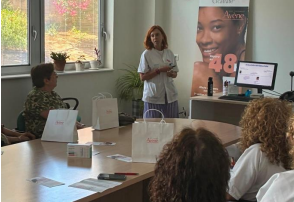
Maria José Gil’s Commitment to Advancing Wound Care Education
Beyond her research activity within TR2Lab, PhD candidate Maria José Gil has played an active role this year in training healthcare professionals across several educational initiatives in the field of wound care, reaching nurses, nursing residents, and healthcare assistants throughout different regions. FOCUSS Training Programmes (IACS) Maria José coordinated and delivered two continuing professional development programmes promoted by the Aragonese Institute of Health Sciences (IACS), part of the FOCUSS Programme, which offers healthcare professionals practical training placements in reference units. The Advanced Wound Care Techniques programme, delivered in three editions with two registered nurses per edition, combined theoretical and hands-on [...]