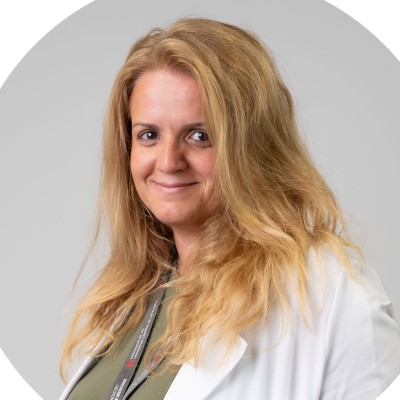
Laia Nogué Navarro
Member of the Determinants of Arrhythmogenesis Research Line
Email: laia.nogue@umedicina.cat
ORCID: 0000-0002-1734-143X
Scientific Profile: URECERCA
Director of the Anatomy Laboratory and Body Donation Service for Science – Faculty of Medicine, UVIC-UCC Senior Technician in Pathological Anatomy and Cytology, with a degree in Criminology, multiple postgraduate qualifications in Forensic Medicine and Forensic Anthropology, and a Master’s in Legal, Forensic, and Criminological Psychopathology. She has practical experience in legal autopsies at the Institute of Legal Medicine of Catalonia (Girona division) and as a dissection room technician at the University of Girona. She currently directs the Body Donation Service for Science and the Anatomy Laboratory at the Faculty of Medicine of UVIC-UCC and serves as a collaborating professor of anatomy. She is also a PhD candidate in Medicine and Biomedical Sciences, with research focused on unexplained sudden death, and a collaborating member of the Cardiovascular Genetics Research Group at IdiBGi. Her international experience includes a research stay at the Forensic Anthropology Center at Texas State University (USA) as part of Operation Identification (OpID), where she developed practical and methodological expertise in the forensic identification of human remains. She completed the Fatal Fire and Mass Disaster Scene Recovery course at HD Forensics, PA, USA, gaining hands-on expertise in the recovery of biological and non-biological evidence, forensic scene mapping, and operations in fire and mass disaster scenarios. This training enhanced her multidisciplinary collaboration skills, working alongside forensic anthropologists, pathologists, law enforcement, and technical teams in complex forensic contexts. These combined experiences have enabled her to serve as an Associate Responder for KENYON Emergency Services, applying her forensic and disaster-response expertise in real-world emergency scenarios.
My last happenings:
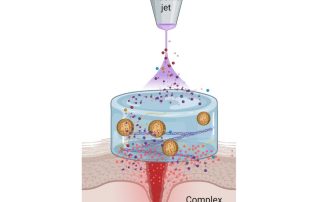
Exploiting Hormesis for Plasma-treated Hydrogel Therapeutic platforms (HormeTic)
Subprojects: Subproject 1: "Exploiting Hormesis for plasma-treated hydrogel therapeutic platforms for cancer treatment (HormOnc)". Subproject 2: "Exploiting Hormesis for plasma-treated hydrogel therapeutic platforms for Healing of complex cutaneous wounds (HormHeal)". Original Title (English): Exploiting Hormesis for plasma-treated hydrogel therapeutic platforms for Healing of complex cutaneous wounds (HormHeal). Objective: Innovating in the healing of complex wounds. TR2Lab research team members: Albert Espona-Noguera (Principal Investigator). Cristina Canal (PI1 of Subproject 1) & Francesco Tampieri (PI2 of Subproject 1). Members of TR2Lab who participate in this project: Elisabet Sarri, Laia Bosch, Gemma Sangüesa, Francesc Sant Masoliver, Cristina Martin Mancera, David Benito Guasch, Clara Masó [...]

Lactic acid as a marker of therapeutic response
Members: Dr M. Parera (CHV), Dr I. Barba (Medicina UVic) Financial support: APR-IRIS-CC The Project “Lactic acid as a marker of therapeutic response” has received approval from the IRIS-CC ethics committee and will start recruiting patients in earnest. The project is a collaboration between Consorci Hospitalari de Vic (Dr M. Parera) and the faculty of medicine UVic (Dr I.Barba) and will evaluate lactic acid as a potential marker of therapeutic response in non-small cell lung cancer patients. We would like to thank all the patients who selflessly participate in this project. El projecte «L'àcid làctic com a [...]
Predictors of Recurrence and Survival in Endometrial Cancer: A 22-Year Single-Center Cohort Study
Funding: Industrial Doctorates Plan of the Government of Catalonia (Industrial Doctorate; DI-2024-00104) Osona Contra el Càncer (OCC) «Ajuts per a Projectes de Recerca Interns» call of the Fundació d’Estudis Superiors en Ciències de la Salut (FESS; APR-2025-FESS) Authors: E. Sardo (1,6,7,8,), M. Alejo Sánchez (2,7), M. Parera Roig (1,6,7,8,), C. Cruz Zambrano (6,7,8,), N. Espejo Herrera (2,8), K. Salas León (2), A. Canet Gómez (2), M. Armengou Ríos (2), C. Vila Díaz (2), E. Puigoriol Juvanteny (3), S. Moros Weakner (4), V. Álvarez Torrecillas (4), I. Gallego Anton (8), M.Panadès Tejero (8), M. Zarcero Estevez (5), S. Griñó [...]