[English below]
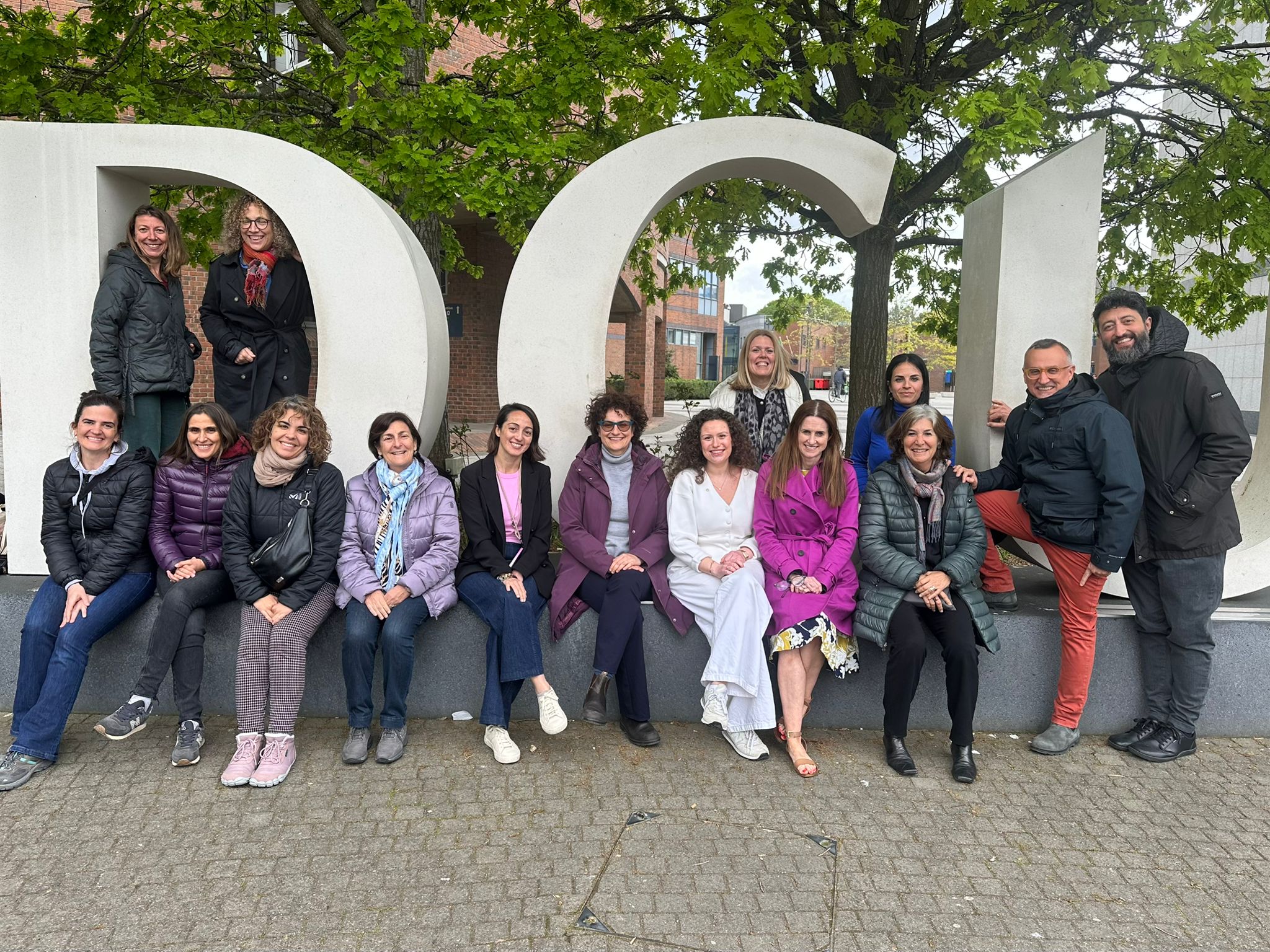
Des de la reunió del TPM a Dublín el passat mes de maig (que us vam explicar en l’entrada anterior), el projecte HOW TIMELY no ha parat. Durant aquests mesos, les professores han completat la formació en traducció audiovisual didàctica aplicada a les llengües minoritzades a través de la plataforma HOW TIMELY i s’han endinsat en l’elaboració de les activitats de subtitulació, doblatge i audiodescripció que ara arriben a l’aula.
Per coordinar la implementació, les tres escoles participants (l’INS Alexandre de Riquer de Calaf, a Catalunya, el Convitto Nazionale Canopoleno de Sàsser, a Sardenya, i el Coláiste Ghlór na Mara de Balbriggan, a Irlanda) han creat un projecte eTwinning conjunt perquè l’alumnat es vagi coneixent i pugui compartir el que va fent.
A l’Institut Alexandre de Riquer, la implementació va començar fa tres setmanes amb 70 joves repartits en tres grups. Les professores van presentar el projecte HOW TIMELY, l’agermanament eTwinning, les activitats previstes i van explicar en què consisteix el projecte de recerca europeu en què participen.
Després van començar amb les pròpies activitats d’eTwinning:
- Avatars i Who is Who. Com a activitat inicial, l’alumnat ha creat el seu avatar amb una aplicació i l’ha acompanyat d’una petita descripció física, en català i en anglès, perquè els companys i companyes d’altres països el puguin identificar. Aquests perfils es penjaran a la plataforma eTwinning i l’alumnat dels tres instituts podrà jugar al Who is Who.
- Vídeos subtitulats. Ara està en marxa la primera de les tres activitats principals: crear vídeos en llengua minoritzada (en català, sard o irlandès, respectivament) subtitulats en anglès. Els grups han triat temes molt diversos: el dia a dia, les llegendes i tradicions catalanes, la gastronomia, l’esport o els contes. Sovint, partint de «el meu dia a dia», hi van enllaçant altres elements: l’entrenament i com és l’esport a Catalunya, els contes que coneixen, o què es menja a dinar i a sopar i què diu això de la gastronomia catalana, i moltes coses més.
El pròxim pas serà subtitular en anglès els vídeos creats per compartir-los a la plataforma eTwinning. Així, l’alumnat de Sardenya i d’Irlanda podrà sentir la llengua catalana i accedir al contingut a través de la subtitulació en anglès, una manera de fomentar la sensibilitat plurilingüística i pluricultural i d’afavorir la visibilització de les llengües minoritzades.
Les professores han format grups volgudament heterogenis, barrejant alumnat que no tingui el català com a llengua inicial amb d’altres que dominin bé l’anglès o que tinguin més facilitat per a la part tecnològica. Així, cada equip pot repartir-se les tasques, col·laborar i aprendre entre iguals.
De moment, l’alumnat està molt engrescat!
The implementation phase of HOW TIMELY begins at Institut Alexandre de Riquer in Calaf
Since the TPM in Dublin last May (which we told you about in the previous post), the HOW TIMELY project has not stood still. Over these months, the teachers have completed their training in didactic audiovisual translation applied to minoritised languages through the HOW TIMELY platform, and have delved into developing the subtitling, dubbing and audio description activities that are now reaching the classroom.
To coordinate the implementation, the three participating schools (INS Alexandre de Riquer in Calaf, Catalonia; Convitto Nazionale Canopoleno in Sassari, Sardinia; and Coláiste Ghlór na Mara in Balbriggan, Ireland) have created a joint eTwinning project so that their students can get to know each other and share what they are working on.
At Institut Alexandre de Riquer, the implementation began three weeks ago with 70 young people divided into three groups. The teachers introduced the HOW TIMELY project, the eTwinning partnership and the planned activities, and explained what the European research project they are taking part in involves.
They then moved on to the eTwinning activities themselves:
- Avatars and Who is Who. As an opening activity, students have created their own avatar with an app and accompanied it with a short physical description, in Catalan and in English, so that their peers in other countries can identify them. These profiles will be uploaded to the eTwinning platform, and students from all three schools will be able to play Who is Who.
- Subtitled videos. The first of the three main activities is now under way: creating videos in a minoritised language (Catalan, Sardinian or Irish, respectively) with English subtitles. The groups have chosen a wide range of topics: daily life, Catalan legends and traditions, gastronomy, sport and tales. Starting from “my daily life”, they often weave in other elements: training and what sport is like in Catalonia, the stories they know, or what people eat for lunch and dinner and what that says about Catalan gastronomy, and much more.
The next step will be to subtitle the finished videos in English and share them on the eTwinning platform. In this way, students in Sardinia and Ireland will be able to hear the Catalan language and access the content through the English subtitles, a way of fostering plurilingual and pluricultural awareness and of giving greater visibility to minoritised languages.
The teachers have deliberately formed heterogeneous groups, mixing students whose first language is not Catalan with others who have a good command of English or find the technical side easier. This way, each team can share out the tasks, collaborate and learn from one another.
So far, the students are very enthusiastic!
[Translated with AI]