

Authors: Crespo-Santiago, J; Jordana, X; Gesualdo, M; Álvarez, A; Mallafré, H; Otero-Vinas, M; Rzymelka V; Andreu C; Garrido X; Schwab N; Galtés I.
Exploring the potential of Phygital Bone as a synthetic surrogate for forensic bone trauma.
Scientific Reports, 2026.
DOI: https://doi.org/10.21203/rs.3.rs-10206802/v1
Keywords: Health sciences/Anatomy; Physical sciences/Engineering; Physical sciences/Materials science; Health sciences/Medical research; Bone trauma; Synthetic bone surrogate; Forensic trauma reconstruction; Bone biomechanics; 3D-printed bone model.
Funding: This research was funded by: AEI Clusters Spanish Ministry for Industry and Tourism (AEI-010500-2024-18), Llavor AGAUR Gencat (2023 LLAVOR 0005), and Proyectos de Generación de Conocimiento, Agencia Estatal de Investigación (PID2021-124112NB-100).
Mechanical trauma analysis is vital in forensic investigations to determine causes of death, yet current synthetic bone surrogates inadequately replicate human bone’s biomechanical and microstructural properties. Here we explore the potential of the Phygital Bone (PHyB) model, a 3D-printed synthetic femur reproducing human bone macro- and microarchitecture, against fresh human femora and commercial surrogates (Synbone, Sawbones) via compression, three-point bending, and gunshot trauma tests. PHyB closely matched human femora in compression stiffness and fracture patterns, while Sawbones better approximated bullet energy loss. None fully replicated bending behavior. Cortical trait analysis revealed PHyB shares some fracture characteristics with human bone, indicating improved biomimicry. These findings suggest PHyB offers a promising platform for forensic trauma reconstruction, particularly for compression-related scenarios, though further validation across diverse loading conditions is needed before widespread forensic application.
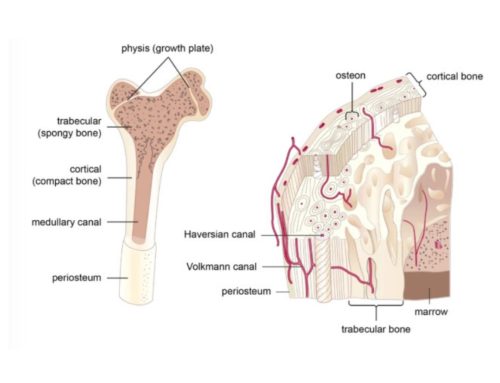
This study aimed to explore the validity of the Phygital Bone model for forensic research by comparing its performance against established synthetic surrogates Synbone and Sawbones, and fresh human femur. The objective was to determine if PHyB could more accurately replicate the mechanical and trauma-related characteristics of biological bone than commercial surrogates. Following a combination of mechanical testing (compression and three-point bending), gunshot trauma analysis, and cortical trait assessment, the PHyB F4K model demonstrated a comparatively higher degree of biofidelity. While Synbone was found to lack sufficient structural and biomechanical realism, Sawbones provided a credible ballistic response. However, the PHyB F4K model showed some similarity in mechanical properties to human bone and demonstrated aspects of improved performance in ballistic impact response and fracture patterning. Hence, it may offer a promising surrogate for trauma reconstruction in forensic casework and biomechanical research. Beyond the F4K variant specifically, Phygital Bone represents a significant advancement in biomimetic bone modelling by successfully reproducing essential microstructural elements such as osteons, lamellae, and cement lines. Although no synthetic model can yet fully replicate the inherent complexity of the human femur, these findings suggest that PHyB provides a more sophisticated and realistic alternative to existing commercial surrogates. Nevertheless, despite this high performance, PHyB remains in the developmental phase. Further validation, reproducibility testing, and refinement are essential before this emerging model can be integrated into standardized forensic protocols or casework. Future research should focus on comparative fracture pattern analysis under blunt force trauma and three-point bending, utilizing the methodologies established by Scheirs et al. [23, 24] to expand the experimental database and further validate the Phygital Bone model.








Leave a Reply