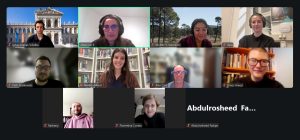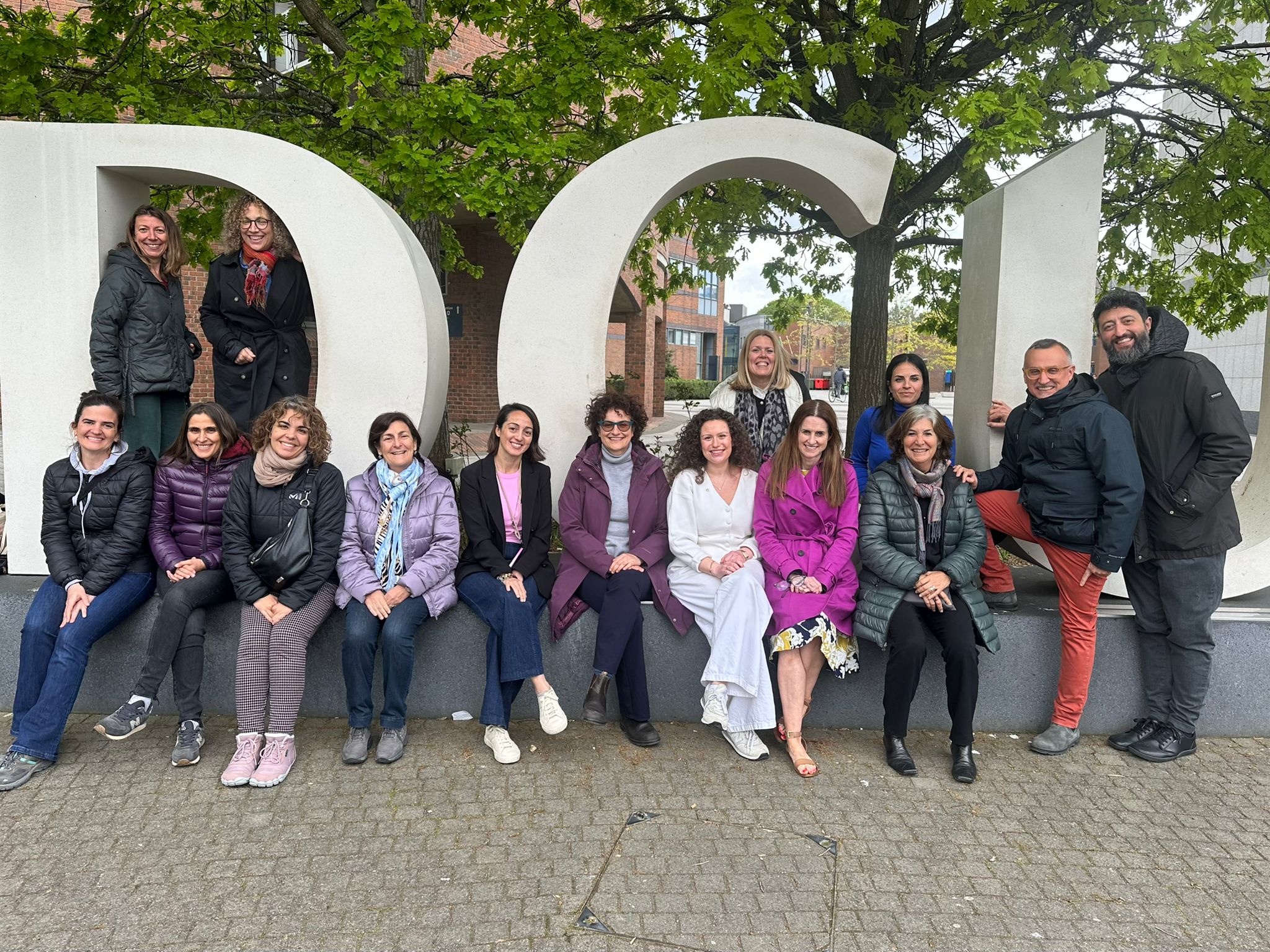
Yesterday marked the first edition of the Workshop ‘Speak on Screen’ organized by research teams of the projects RISE UP and HOW TIMELY. Participants, diverse both linguistically and professionally, were enthusiastic about learning the basics of dubbing and subtitling, whether to apply them in their own productions or to promote these practices in minoritized languages in their region.
Indeed, audiovisual translation (AVT) offers numerous advantages for minoritized languages. Dubbing, for instance, which replaces the original voice with the translated one, is particularly useful for importing content produced in dominant languages so that it can be enjoyed in a minoritized language.
Voice-over, on the other hand, does not replace the original voice but overlays the translation on top of it. This technique, often used in documentaries and reports, may help make audiovisual content created in a minoritized language available in another language, while keeping the original audio audible.
Subtitling, which provides a written translation of the audio, has the advantage of fully highlighting the minoritized language, since it is neither replaced nor covered. Moreover, same-language subtitling (SLS) has proven particularly beneficial for language learning and the development of literacy skills, which can be very beneficial to minoritized languages too.
Finally, audiovisual accessibility modalities such as SDH (Subtitles for the Deaf and Hard of Hearing) and AD (Audio Description) were also discussed, not only for their primary goal of promoting the inclusion of sensory diverse audiences, but also, once again, for their pedagogical potential.
Workshop participants will now begin exploring the practice of dubbing and subtitling using the learning platform developed as part of the How Timely project.
See you on December 1st for the next session!