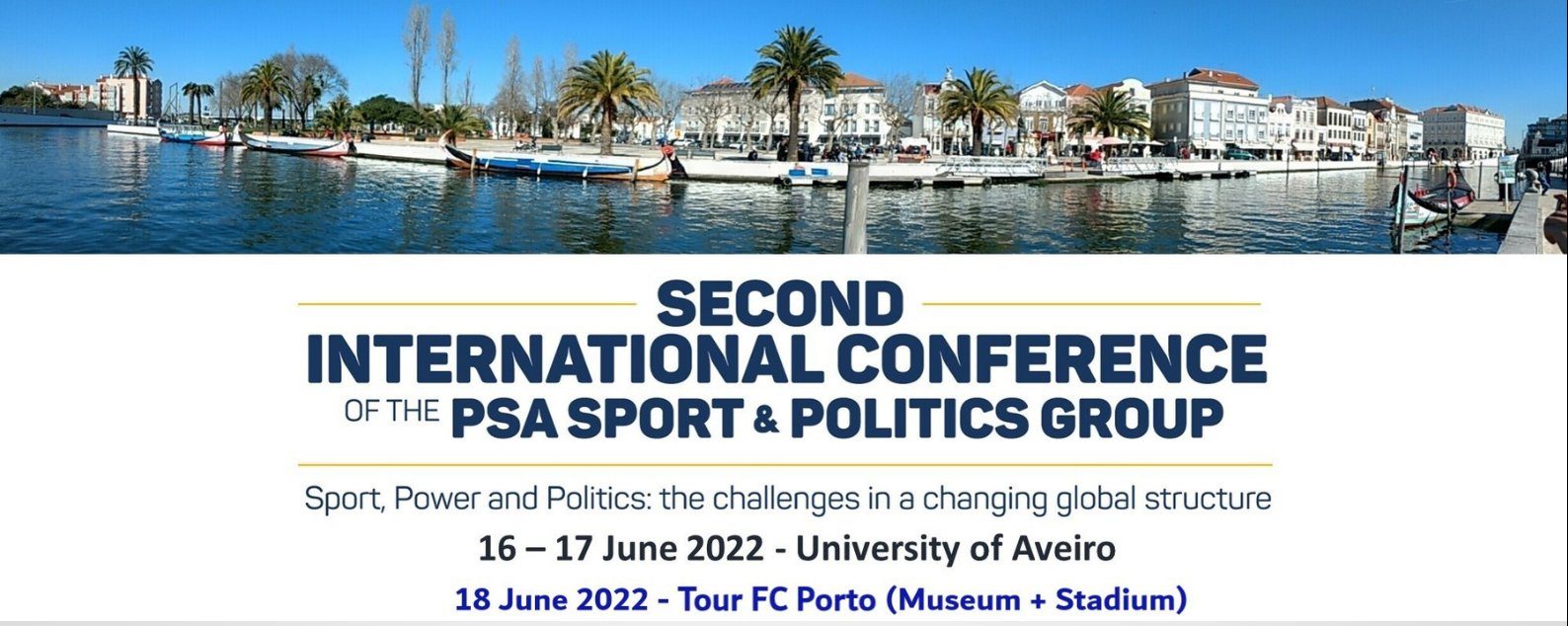
With spirits undimmed by the unseasonal soft summer rain, more than fifty delegates were welcomed by the University of Aveiro for the Second International Conference of the Sport and Politics Study Group. The event took place over three days from June 16- 18th, but had been more than two years in the planning. After all the frustrations of the pandemic, and the endless cycle of Zoom, Teams and Online Webinars, it was so heart- warming and special to see friends and colleagues from Portugal, Brazil, China, The United States, England, Ireland, Italy and Poland convene for an ‘old fashioned’ traditional conference. Many of them were introduced for the first time to the ‘secret’ treasure of the small city of Aveiro, with its bridges, canals, and cluster of souvenir shops selling salt, socks and ceramics. Over the three days of the event, along with many other delegates I became familiar with Uber rides and walks to and from the campus on the edge of town.
At the core of the event were a cluster of panels, mostly delivered in English but with two in Portuguese, supported by four excellent plenary addresses. The panels addressed an eclectic range of research interests in the Sport and Politics subject area, including Constructions of Fandom, Sport and Identity and the nature of Sporting Mega- Events, in a sporting world which moved from Beijing to Barcelona, Oldham to Kosovo, Chile to Qatar. The atmosphere was open and informal. Presentations were given by a mixture of senior and early career academics, together with several promising research students. These were invariably followed by lively and thoughtful discussion. The plenary sessions focussed on divergent aspects of the conference theme, Sport, Politics and Power, to articulate many of the contemporary debates resonating in the geopolitical concerns of global sport. Stacey Pope from the University of Durham provocatively questioned notions of gender and inequality in Women’s football, before Pippo Russo from the University of Florence introduced delegates to the murky world of the unregulated power of football agents. Flavio do Campos from the University of Sao Paulo, ably abetted by the translation skills of Carlos Rodrigues, one of our hosts in Aveiro, spoke with great insight about the relationship between Football and Politics in Brazil. In the final plenary session Richard Giulianotti from the University of Loughborough addressed delegates enthusiastically about his work in Sport for Peace and Development: a positive antidote to the recurrent use of sport to accentuate geopolitical tensions and divisions.
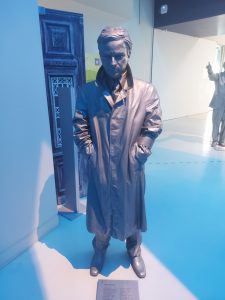
‘The Special One’ meets Columbo?
In addition to the academic programme, a fascinating cultural dimension was added to the conference by the involvement of Aveiro City Council and FC Porto. On Thursday, June 16th at the end of the first day, a number of delegates attended a private tour of the city museum, which revealed some of its hidden treasures, most notably a wonderful monastery wrapped in gold from Portugal’s imperial past. The following day, a round table event included an insightful presentation on the history and identity of FC Porto in Northern Portugal by Diogo Faria from the club’s archive section. This was the precursor to a visit to the club’s museum on Saturday, June 18th. One could not fail to be impressed by the interactive approach adopted, the friendly manner with visitors, and the rich tapestry of the club’s history, status, outstanding players and achievements. There is more to FC Porto than ‘The Special One’! The museum certainly merits a further visit.
This review cannot pass into the annals of the SPRING archive without mentioning some people who helped make the conference such a success. Routledge kindly donated both a book display and two prizes for the best paper. These were awarded to Independent Researcher Gayle Rogers, for her illuminating study of virtual memory and the Munich Air Crash of 1958, and to Gabe Logan from the University of Southern Montana who gave us a fascinating insight into Soccer in Chicago during the 1930s. A further book prize was given to Natalia Sullen Pereira da Silva, from Brazil, who spoke in Portuguese about black female footballers in Brazilian society. The sponsorship of the event by the journal ‘Frontiers in Sports and Active Living’ should also be acknowledged. This has resulted in the forging of a collaborative research project between Frontiers and SPRING on the topic Sport, Power and Policies, with the intention that a themed special issue will be published during 2023. The support and involvement of SPRING for the Aveiro Conference should be noted. Its so healthy and positive that we have both the Sport and Politics Study Group and SPRING as forums for events, discussion and debate within the interdisciplinary nature of this area of study.
Time passes, and we already start to contemplate scenes and venues for future conferences. Watch this space! Thanks should go out to Emanuel and Carlos for all their wonderful work before and during Aveiro 22. You made all the delegates feel so valued and welcome. In the end, the success of the conference was down to the participants. Thank you for sharing your interests, passion and research during those few short days in June 2022.
Jim O’Brien, Sport and Politics Study Group and SPRING.