Category Archives: CBBL News

Visit of professor Yuk Sham, University of Minnesota

Posted by 6 de September de 2024

Professor Yuk Sham visits the CBBL for a collection of meetings and seminar.

Professor Sham is an expert in molecular simulations, in particular protein-protein and protein-ligand interactions. The work of his laboratory focuses on tools conducting to the rational discovery of drugs, and has a long trajectory in the field of computational biochemistry. During his visit, the current research projects of the CBBL and the ShamLab were explored, in search of synergies and possible collaborations.

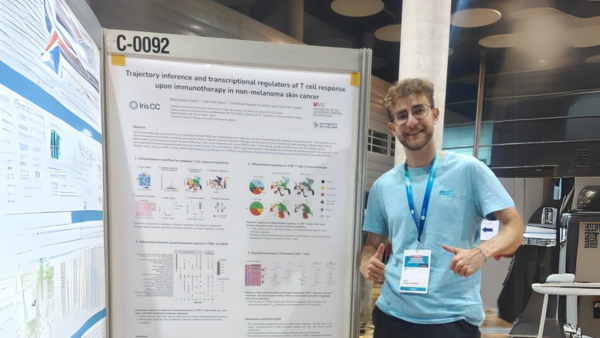
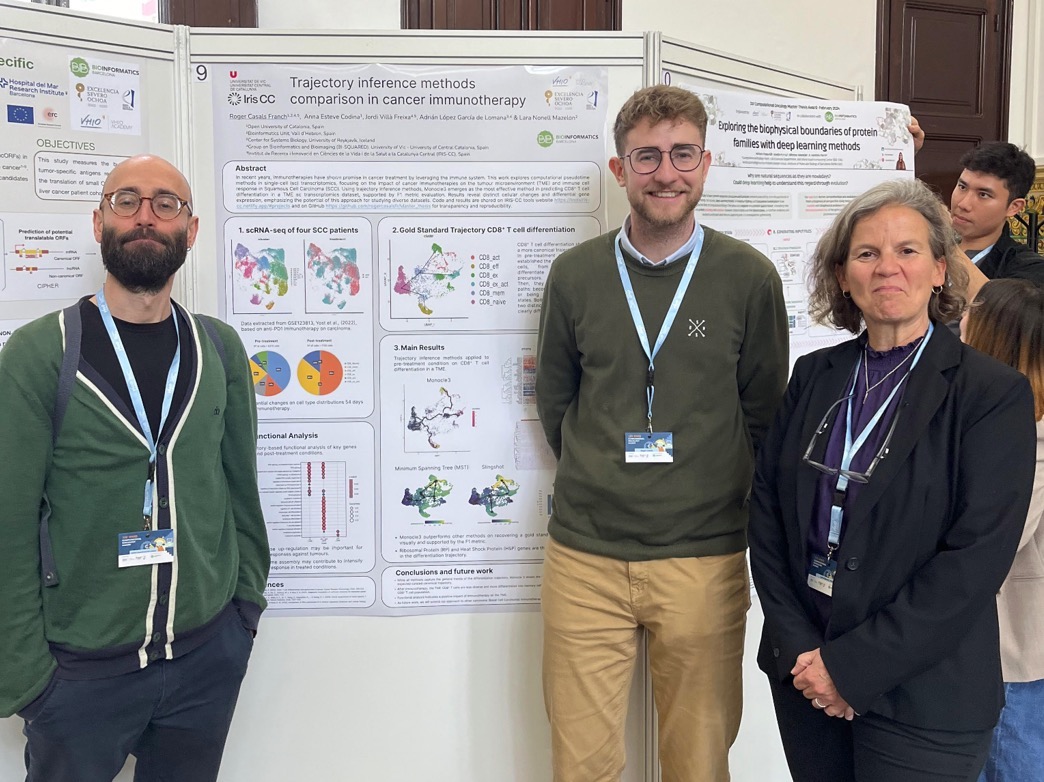
Roger Casals, selected to present a poster for the Award of Computing in Oncology (VHIO)

Posted by 22 de February de 2024

Roger Casals, UVIC-UCC PhD student in the Bioinformatics program and member of the CBBL, was selected to present the poster “Trajectory Inference Methods Comparison in Cancer Immunotherapy” at the first edition of the Award of Computing in Oncology, organized by the Vall d’Hebron Institute of Oncology (VHIO).

The contest was held on February 21, 2024 at the Casa Convalescència in Barcelona and was a meeting to recognize the best master’s thesis in computational science at national level.

Roger works in the analysis of “single-cell” transcriptomics data, which allows analyzing gene expression at scale individual cells, revealing crucial details about biology.

This work has been supervised by Lara Nonell i Mazelon (VHIO), Jordi Villà i Freixa (UVic-UCC / IRIS-CC) and Adrián López García de Lomana (UVic-UCC, HI), and has had the support of the “Programa Investigo AGAUR” (2023 INV-200003TG1) at as a technologist at the IRIS-CC.

Polyrate 2023: new version announcement

Posted by 8 de September de 2023

Polyrate is a suite of computer programs for the calculation of chemical reaction rates of polyatomic species (including atoms and diatoms as special cases) by variational transition state theory (VTST); conventional transition state theory is also supported. The Polyrate suite has been developed by Donald Truhlar and coworkers for several decades and it is the reference tool for the calculation of both bimolecular reactions and unimolecular reactions, and it can be applied to reactions in the gas phase, liquid solution phase, or solid state and to reactions at gas–solid interfaces.

The participation of the members of the CBBL in the program was in the development of the re-orientation of the dividing surface (RODS) [1,2] algorithm that allow VTST calculations with larger step sizes.

[1] J. Villà, D.G. Truhlar, Theor. Chem. Acc. 97 (1997) 317-323, https://doi.org/10.1007/s002140050267.

[2] A. González-Lafont, J. Villà, J.M. Lluch, J. Bertrán, R. Steckler, D.G. Truhlar, J. Phys. Chem. A 102 (1998) 3420-3428, https://doi.org/10.1021/jp9807672.

REF:

Meana-Pañeda, Rubén; Zheng, Jingjing; Bao, Junwei Lucas; Zhang, Shuxia; Lynch, Benjamin J.; Corchado, José C.; Chuang, Yao-Yuan; Fast, Patton L.; Hu, Wei-Ping; Liu, Yi-Ping; Lynch, Gillian C.; Nguyen, Kiet A.; Jackels, Charles F.; Fernández-Ramos, Antonio; Ellingson, Benjamin A.; Melissas, Vasilios S.; Villà, Jordi; Rossi, Ivan; Coitiño, Elena L.; Pu, Jingzhi; Albu, Titus V.; Zhang, Rui Ming; Xu, Xuefei; Ratkiewicz, Artur; Steckler, Rozeanne; Garrett, Bruce C.; Isaacson, Alan D.; Truhlar, Donald G.

Polyrate 2023: A computer program for the calculation of chemical reaction rates for polyatomics. New version announcement Journal Article

In: Computer Physics Communications, vol. 294, pp. 108933, 2024, ISSN: 0010-4655.

CDK6 is activated by the atypical cyclin I to promote E2F‐mediated gene expression and cancer cell proliferation

Posted by 1 de June de 2023

A paper has been just published in Molecular Oncology in a collaboration led by our colleagues Josep Clotet and Mariana P. Ribeiro (UIC Barcelona) on the interaction of CDK6 with the atypical cyclin I. The CBBL has contributed with molecular modelling analysis of the interface region. Martin Floor and Pau MArc Muñoz, past members of the CBBL, did all the computational work.

Abstract: Cyclin-dependent kinases (CDKs), together with their cyclin partners, are the master cell cycle regulators. Remarkably, the cyclin family was extended to include atypical cyclins, characterized by distinctive structural features, but their partner CDKs remain elusive. Here, we conducted a yeast two-hybrid screen to identify new atypical cyclin–CDK complexes. We identified 10 new complexes, including a complex between CDK6 and cyclin I (CCNI), which was found to be active against retinoblastoma protein. CCNI upregulation increased the proliferation of breast cancer cells in vitro and in vivo, with a magnitude similar to that seen upon cyclin D upregulation, an effect that was abrogated by CDK6 silencing or palbociclib treatment. In line with these findings, CCNI downregulation led to a decrease in cell number and a reduction in the percentage of cells reaching S phase. Finally, CCNI upregulation correlated with the high expression of E2F target genes in large panels of cancer cell lines and tissue samples from breast cancer patients. In conclusion, we unveil CCNI as a new player in the pathways that activate CDK6, enriching the wiring of cell cycle control..

Open position within the INVESTIGO program

Posted by 19 de April de 2023

A 2 years position within the framework of the INVESTIGO call is now open in the Bioinformatics and Bioimaging research area of the Institut de Recerca i Innovació en Ciències de la Vida i la Salut a la Catalunya Central (IRIS-CC).

Our lab is currently developing a new line on multiomics data analysis, in particular in the interaction between transcriptomics and metabolomics, to understand the dynamics of gene regulation in different tissues and cell types. The candidate (limit of 30 years old, see also other constraints in the specific call below) will have strong programming skills (Python/R), training in Biostatistics, Bioinformatics or related subjects at the level of BSc/MSc and specific interest in massive biological data analysis by means of machine learning techniques.

The work will be carried out in close collaboration with Adrián López García de Lomana (University of Iceland). Working place is the Faculty of Sciences, Technology and Engineering at the UVic-UCC.

Check the details (in Catalan) of the selection process in this file.

Deadline, May 3rd, 2023

Nayanika Das presents a poster at RQTC/SCQ on recent work in GPX6 evolution and activity

Posted by 1 de February de 2023

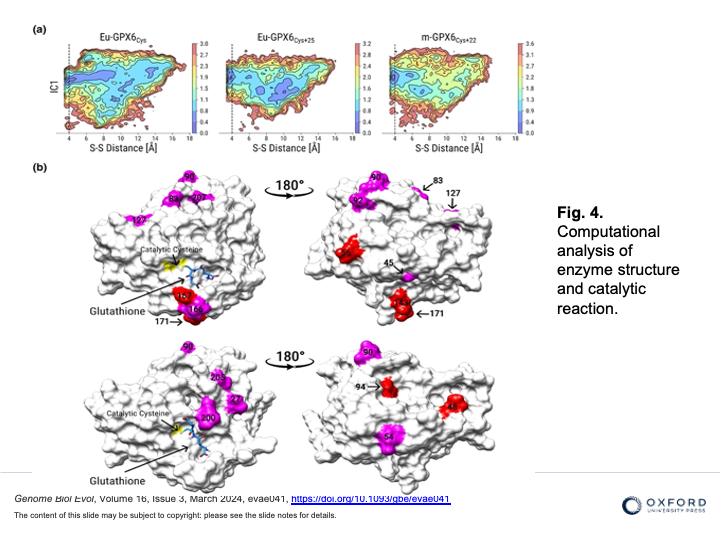
In a recent work coordinated by Sergi Castellano (UCL), and in collaboration with Elias Arnér research group (Karolinska), we have investigated the phylogeny of Glutathione Peroxydase 6 (GPX6) and evaluated the effect of Cys/Sec variants in the loss/gain of its peroxidase activity and glutathione binding. In this poster, Nayanika presents her PhD project (cosupervised by Prof. Vijay Baladhye, Savitribai Phule Pune University) on the evaluation of the enzymatic activity of the protein in relation to its evolutionary history, grounded by the recent paper, that also included our former member Martin Floor. The presentation took place during the 1st meeting on Theoretical and Computational Chemistry by the Catalan Chemistry Society. Exciting PhD project ahead!

Workshop of the Interuniversity PhD program in Bioinformatics

Posted by 24 de January de 2023

On February 3rd, the PhD program in Bioinformatics, a joint program of the UAB, UB, UdG, UdL, UOC, UPC, URV and UVic-UCC universities, in collaboration with the Bioinformatics Barcelona association (@BiBcn), will meet at the UVic-UCC Aula Magna to host its annual workshop. In this event, along with presentations and poster sessions by the current students of the program, we will enjoy keynote talks by Dr. Mar Albà (IMIM/ICREA) and Dr. María Ortiz (Bristol Myers Squibb).

You can find the up-to-date details of the workshop at https://mon.uvic.cat/cbbl/outreach/phdworkshop2023/

Attendance is free, but registration is needed. If you plan to attend, please, fill in the form at https://forms.gle/qjub49uRb5JHnvM56.

We hope seeing you in Vic for this good networking event, with topics on

  • Omics and molecular bioinformatics
  • Biomolecular modelling and simulation
  • Systems and synthetic biology
  • Data science in bioinformatics
  • Biostatistics and mathematical modelling in bioinformatics

#phdbioinfo2023

Ancient loss of catalytic selenocysteine spurred convergent adaptation in a mammalian oxidoreductase

Posted by 10 de January de 2023

Selenocysteine (Sec), the 21st amino acid specified by the genetic code, is a rare selenium-containing residue found in the catalytic site of selenoprotein oxidoreductases. Sec is analogous to the common cysteine (Cys) amino acid but its selenium atom offers physicalchemical properties not provided by the corresponding sulfur atom in Cys. Catalytic sites with Sec in selenoproteins of vertebrates are under strong purifying selection but one enzyme, Glutathione Peroxidase 6 (GPX6), independently exchanged Sec for Cys less than one hundred million years ago in several mammalian lineages. We reconstructed and assayed these ancient enzymes before and after Sec was lost and up to today, and found them to have lost their classic ability to reduce hydroperoxides using glutathione (GSH). This loss of function, however, was accompanied by bursts of amino acid changes in the catalytic domain, with protein sites concertedly changing under positive selection across distant lineages abandoning Sec in GPX6. This demonstrates that when sulfur in Cys impairs catalysis a narrow evolutionary path is followed, with epistasis and pleiotropy leading to convergent evolution and triggering enzymatic properties likely beyond those in classic GPXs. These findings are an unusual example of adaptive convergence towards unexplored oxidoreductase functions during mammalian evolution.

  • Preprint: Ancient loss of catalytic selenocysteine spurred convergent adaptation in a mammalian oxidoreductase. Jasmin Rees, Gaurab Sarangi, Qing Cheng, Martin Floor, Aida M Andrés, Baldomero Oliva Miguel, Jordi Villà-Freixa, Elias SJ Arnér, Sergi Castellano BioRxiv doi: https://doi.org/10.1101/2023.01.03.522577
  • Published article: Ancient Loss of Catalytic Selenocysteine Spurred Convergent Adaptation in a Mammalian Oxidoreductase. Jasmin Rees, Gaurab Sarangi, Qing Cheng, Martin Floor, Aida M Andrés, Baldomero Oliva Miguel, Jordi Villà-Freixa, Elias S J Arnér, Sergi Castellano Genome Biology and Evolution, Volume 16, Issue 3, March 2024, evae041, https://doi.org/10.1093/gbe/evae041

Dynamic chromatin association of IκBα is regulated by acetylation and cleavage of histone H4

Posted by 20 de December de 2021

IκBs exert principal functions as cytoplasmic inhibitors of NF-kB transcription factors. Additional roles for IκB homologues have been described, including chromatin association and transcriptional regulation. Phosphorylated and SUMOylated IκBα (pS-IκBα) binds to histones H2A and H4 in the stem cell and progenitor cell compartment of skin and intestine, but the mechanisms controlling its recruitment to chromatin are largely unknown. In a recent paper led by Lluís Espinosa at IMIM, the team showed that serine 32–36 phosphorylation of IκBα favors its binding to nucleosomes and demonstrate that p-IκBα association with H4 depends on the acetylation of specific H4 lysine residues. The N-terminal tail of H4 is removed during intestinal cell differentiation by proteolytic cleavage by trypsin or chymotrypsin at residues 17–19, which reduces p-IκBα binding. Inhibition of trypsin and chymotrypsin activity in HT29 cells increases p-IκBα chromatin binding but, paradoxically, impaired goblet cell differentiation, comparable to IκBα deletion. Taken together, the results indicate that dynamic binding of IκBα to chromatin is a requirement for intestinal cell differentiation and provide a molecular basis for the understanding of the restricted nuclear distribution of p-IκBα in specific stem cell compartments.

In summary:

Nuclear IκBα preferentially binds the acetylated N-terminal tail of histone H4 in vivo, specifically in the skin and intestine stem cell compartments. N-terminal cleavage of histone H4 facilitates IκBα dissociation and cellular differentiation.

    • Nuclear IκBα binds the acetylated N-terminal tail of histone H4.
    • The N-terminal tail of histone H4 is lost during cellular differentiation.
  • Histone H4 cleavage is likely produced by Trypsin and Chymotrypsin.
  • Cellular differentiation requires dynamic IκBα chromatin binding and dissociation.

Laura Marruecos, Joan Bertran, Daniel Álvarez-Villanueva, María Carmen Mulero, Yolanda Guillén, Luis G Palma, Martin Floor, Anna Vert, Sara Arce-Gallego, Irene Pecharroman, Laura Batlle, Jordi Villà-Freixa, Gourisankar Ghosh, Anna Bigas, Lluís Espinosa. Dynamic chromatin association of IκBα is regulated by acetylation and cleavage of histone H4. EMBO Reports (2021)22:e52649 2021 https://doi.org/10.15252/embr.202152649

See also comment by Maarten Dhaenens in EMBO Reports.

Selected publication: SBMOpenMM; A Builder of Structure-Based Models for OpenMM

Posted by 20 de December de 2021

Molecular dynamics (MD) simulations have become a standard tool to correlate the structure and function of biomolecules, and significant advances have been made in the study of proteins and their complexes. A major drawback of conventional MD simulations is the difficulty and cost of obtaining converged results, especially when exploring potential energy surfaces containing considerable energy barriers. This limits the wide use of MD calculations to determine the thermodynamic properties of biomolecular processes. Alternatively, a wide range of Structure-Based Models (SBMs) has been used in the literature to unravel the basic mechanisms of biomolecular dynamics. In a recent article in JCIM, we introduce SBMOpenMM, a Python library to build force fields for SBMs, that uses the OpenMM framework to create and run SBM simulations. The code is flexible, user-friendly, and profits from the high customizability and performance provided by the OpenMM platform.

SBMOpenMM: A Builder of Structure-Based Models for OpenMM

Martin Floor, Kengjie Li, Miquel Estévez-Gay, Luis Agulló, Pau Marc Muñoz-Torres, Jenn K. Hwang, Sílvia Osuna, and Jordi Villà-Freixa
Journal of Chemical Information and Modeling 2021 61 (7), 3166-3171

DOI: 10.1021/acs.jcim.1c00122