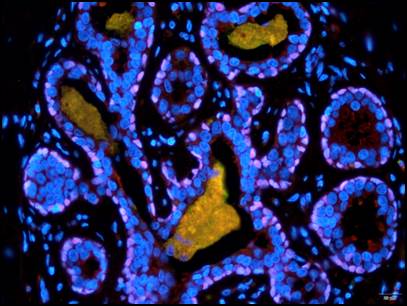
The Understanding Breast Cancer: cell and tissue microenvironment crosstalk (UBC) research line is leaded by Ph.D. Gemma Fuster and is centered to better molecularly know ductal carcinoma in situ in breast cancer, the most common pre-invasive form of breast cancer, and its transition process to invasive breast cancer, taking into account microenvironment influences.
Our research project focuses on understanding the role of the microenvironment (including both tumor crosstalk and influences) since it is crucial to understand and predict tumour evolution and treatment. The scientific and technical efforts made to better know crosstalk between these two compartments in tumor process can improve also the knowledge of tissue regeneration context cell’s relationship, contributing to other research TR2lab lines.
Team
Research line coordinator: Ph.D. Gemma Fuster Orellana
Doctoral Candidates:
- Conceiçao Pinto Da Silva
Our last happenings
Lactic acid as a marker of therapeutic response
Members: Dr M. Parera (CHV), Dr I. Barba (Medicina UVic) Financial support: APR-IRIS-CC The Project “Lactic acid as a marker of therapeutic response” has received approval from the IRIS-CC ethics committee and will start recruiting patients in earnest. The project is a collaboration between Consorci Hospitalari de [...]
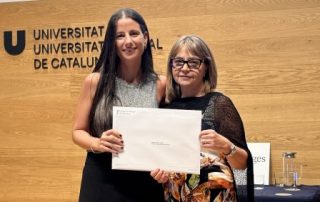
Predictors of Recurrence and Survival in Endometrial Cancer: A 22-Year Single-Center Cohort Study
Funding: Industrial Doctorates Plan of the Government of Catalonia (Industrial Doctorate; DI-2024-00104) Osona Contra el Càncer (OCC) «Ajuts per a Projectes de Recerca Interns» call of the Fundació d’Estudis Superiors en Ciències de la Salut (FESS; APR-2025-FESS) Authors: E. Sardo (1,6,7,8,), M. Alejo Sánchez (2,7), M. Parera Roig [...]
Bringing Science Closer to the Classroom for a Second Consecutive Year during European Researchers’ Night 2026
As part of European Researchers' Night 2026, PhD candidate Clara Masó once again visited Els Castanyers School in Viladrau to bring science closer to young students. For the second consecutive year, pupils from 3rd, 4th and 5th grade took part in interactive workshops designed to introduce them to scientific [...]