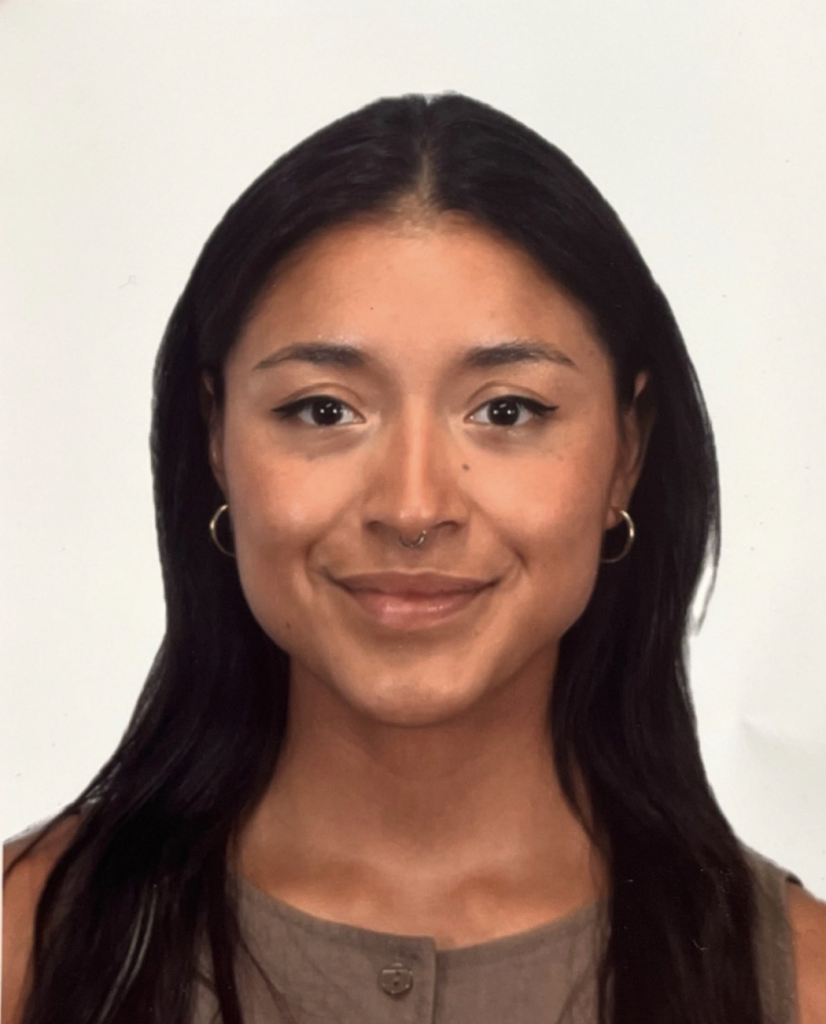
Katherine Tatiana Herrera Panchi
Member of the Research Line in Neuronal Plasticity in Health and Disease
Email: kherrera@iris-cc.cat
Katherine Herrera is a postdoctoral researcher at the Institute for Research and Innovation in Life and Health Sciences in Central Catalonia (IRIS-CC), where she is part of the Research Line in Neuronal Plasticity in Health and Disease led by Dr. Lluís Pujadas. She holds a B.Sc. in Biotechnology (Universitat Politècnica de València), an M.Sc. in Pharmaceutical Research, Development and Control (Universitat de Barcelona, UB), a Postgraduate degree in Data Science: Applications in Biology and Medicine with Python and R (UB), and a Ph.D. in Biomedicine (UB).
Her research career has focused on neuroscience and neuroinflammation, with a particular interest in Alzheimer’s disease. During her doctoral work she investigated Reelin as a modulator of the microglial response in neuroinflammation, using animal models and advanced microscopy. Currently, her postdoctoral project addresses the transmissibility of amyloid pathology, studying how amyloid seeds propagate and shape plaque deposition in the brain
Dr. Herrera has expertise in advanced imaging and microscopy (confocal and fluorescence) for brain tissue analysis, immunohistochemistry and molecular biology techniques applied to the study of neurodegenerative processes, and data analysis and visualization in R for biomedical applications. Her work is driven by an interest in translational research aimed at advancing therapies for neurodegenerative diseases.
My last happenings:
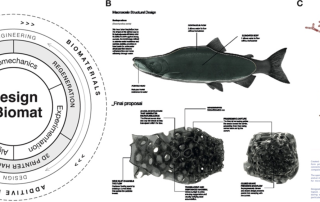
From Subversive Labs to Biodesign Literate Curricula: Rethinking Biodesign Education
Authors: Orcajada M. A., Rognoli V, Crespo-Santiago J, Ordóñez I. Biotechnology design, Cambridge University Press, 2026. Results in Engineering, 2026. DOI:https://doi.org/10.1017/S2977905726100390 Keywords: biodesign; biodesign literacy; subversive; labs; education. Funding: This research was partially funded by the Erasmus+ programme Centres of Vocational Excellence, “Transforming Education Area and Competency Hub for Sustainable Development” (project acronym: TEACH4SD). The content of this publication does not reflect the official opinion of the European Union; responsibility for the information and views expressed lies entirely with the author(s). Read More Biodesign has gained prominence over the past two decades yet remains conceptually hazy and institutionally [...]

TR2Lab Invited at Congresso de Feridas Guarda 2026
Clara Masó Albareda, PhD student at TR2Lab, was invited to participate in the Congresso de Feridas Guarda 2026, held in Guarda, Portugal, on 14–15 October 2026. As part of the scientific programme, Clara delivered an invited lecture in the session “Tempo da Inovação – Hot Topics”, where she presented the latest findings from her doctoral research on regenerative therapies and their potential applications in wound healing. Her presentation provided attendees with an overview of the most recent results of her PhD project and highlighted the ongoing research being conducted at TR2Lab. In addition to the lecture, Clara [...]
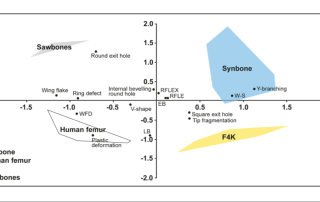
Exploring the Potential of Phygital Bone as a Synthetic Surrogate for Forensic Bone Trauma
Authors: Crespo-Santiago, J; Jordana, X; Gesualdo, M; Álvarez, A; Mallafré, H; Otero-Viñas, M; Rzymelka V; Andreu C; Garrido X; Schwab N; Galtés I. Exploring the potential of Phygital Bone as a synthetic surrogate for forensic bone trauma. Scientific Reports, 2026. DOI: https://doi.org/10.21203/rs.3.rs-10206802/v1 Keywords: Health sciences/Anatomy; Physical sciences/Engineering; Physical sciences/Materials science; Health sciences/Medical research; Bone trauma; Synthetic bone surrogate; Forensic trauma reconstruction; Bone biomechanics; 3D-printed bone model. Funding: This research was funded by: AEI Clusters Spanish Ministry for Industry and Tourism (AEI-010500-2024-18), Llavor AGAUR Gencat (2023 LLAVOR 0005), and Proyectos de Generación de Conocimiento, Agencia Estatal de Investigación (PID2021-124112NB-100). Read More [...]