Professors Raymond Boyle and Richard Haynes analysed emerging scenarios during the 2nd SPRING webinar
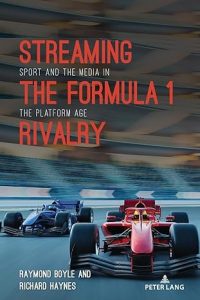 SPRING started its second webinar with the presentation of the researchers: Raymond Boyle, Professor of Communications and Director of the Centre for Cultural Policy Research at the University of Glasgow; and Richard Haynes, Professor of Media Sport at the Division of Communications, Media and Culture at the University of Stirling (Scotland). The focus of the online conference was their book Streaming the Formula 1 Rivalry: Sport and the Media in the Platform Age (2024).
The webinar began with the historical overview of F1, highlighting its main achievements over the decades. The BBC broadcasted the competitions in their early stages, and, as Dr. Haynes explained: “Throughout the 1960s and 1970s, we’d begin to see a far more joined-up commercial relationship between Formula 1 television, sponsors and advertisers”. The historical review concluded with an analysis of F1’s current use of social media.
The next part of the online conference focused on the entry of Liberty Media, the American corporation that acquired the commercial rights to F1 in 2017. According to the researchers, the company identified this sport as a great opportunity to expand its global fan appeal and grew its fan base. In connection with F1’s increasing use of social media and Liberty Media’s new strategic vision, Dr. Raymond Boyle pointed out the weaknesses of journalism: “One of the challenges, however, was that some of the mainstream journalist felt they were slightly excluded, given the strong emphasis on social media and on developing content through the teams and drivers themselves. Sometimes, they felt marginalised, particularly in print and newspaper media”. The webinar concluded by strongly emphasizing the importance of narrative continuity between races as a key element in sustaining audience engagement.
In the final discussion, several questions were addressed to the speakers before the webinar came to a close. These covered topics such as the research methodology employed in the author’s book, audience engagement in sports journalism, the role of female partners in races and the decline of traditional live television broadcasting.