
About Us
About HABIT project
Across Europe, health and social care systems are facing increasing pressure to respond to complex social realities such as population ageing, social isolation, fragmented care pathways and growing demand for person-centred support. At the same time, there is increasing recognition that wellbeing is not shaped only by clinical care, but also by people’s opportunities to participate in meaningful activities, maintain social connections and engage with their communities. The HABIT project addresses this gap through the HABIT IMPACT Approach, an innovative intervention that redefines community-based health promotion through interdisciplinary collaboration, meaningful activity-centred care, and shared decisionmaking. By actively involving individuals in reclaiming their activities, it enhances autonomy, motivation, and engagement. HABIT was created in response to these challenges. Funded by the Erasmus+ Programme, the project introduces an integrated, person-centered approach that embraces collaboration among professionals while equipping them with skills needed to implement sustainable, localized health solutions.
The project also focuses on the development of the Community Care Facilitator (CCF): an emerging professional role that helps bridge the gap between health services, social care and everyday community life. Community Care Facilitators support individuals in identifying meaningful activities, accessing community resources and strengthening their participation in social life. By connecting services with local environments and personal goals, they contribute to continuity of care beyond institutional settings and support more integrated and person-centred approaches. To support this emerging field of practice, HABIT brings together vocational education providers, higher education institutions, social services and community organisations from across Europe. Through collaboration, the project develops innovative training pathways, competence frameworks and practical tools that prepare professionals to work effectively in community-based care environments.
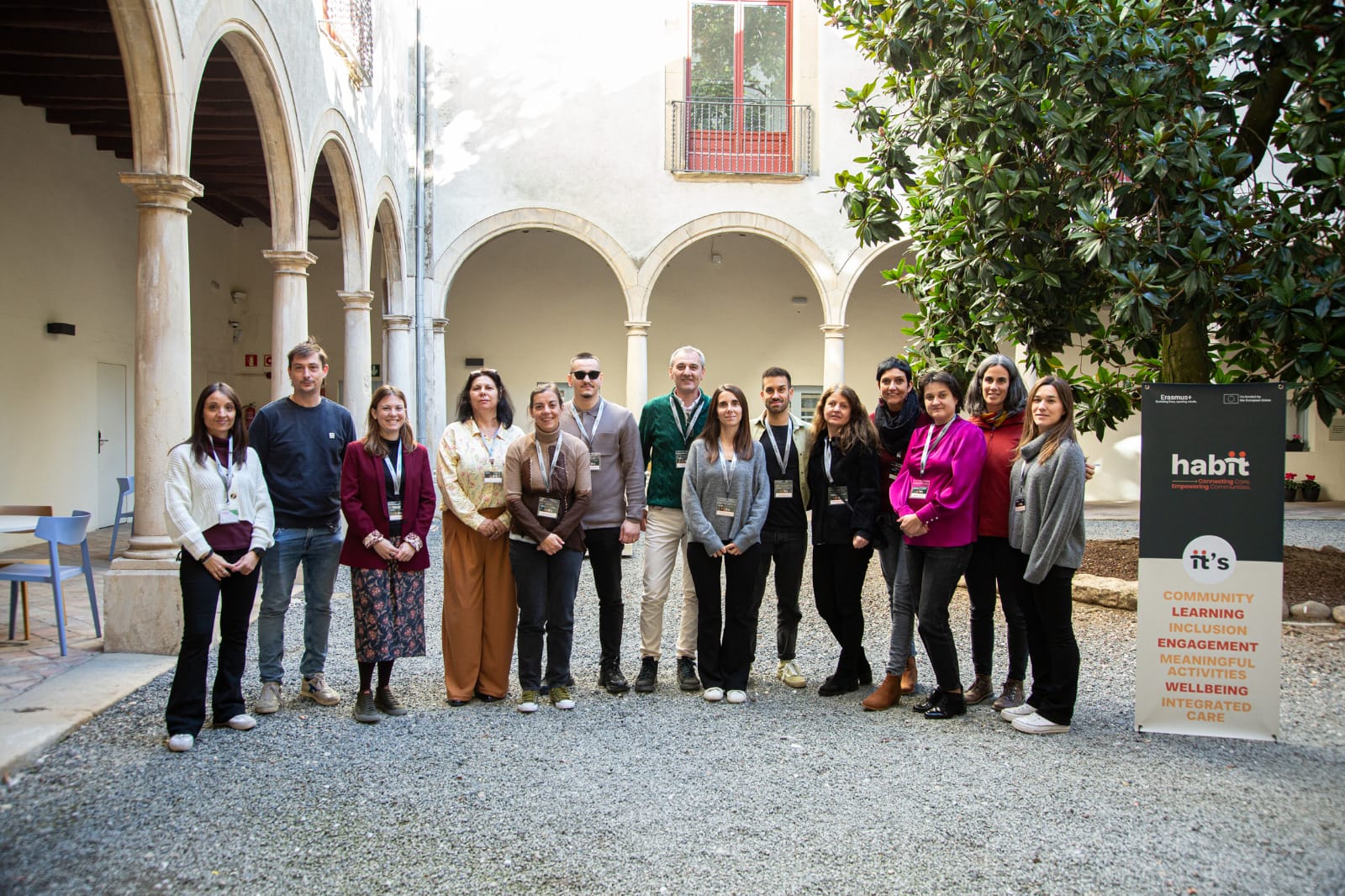
The project combines research, cross- sector collaboration and training development to produce resources that are practical, scalable, transferable and relevant across different European contexts. Its outputs include vocational education curricula, learning materials, practice-based methodologies and knowledge resources designed to support professionals, organisations and communities in implementing participation-oriented care models.
CONSORTIUM
Higher education institutions
University of Vic – Central University of Catalonia (UVic – UCC): Higher Education institution in Vic (Catalonia, Spain). With an emphasis on research and innovation in areas including healthcare, education, and the social sciences, it provides a broad range of undergraduate and graduate programs.
Universitatea din Craiova: University of Craiova is a Romanian prestigious institution of higher education, founded in 1947, undertakes the mission to contribute to the development of knowledge, science and national culture, taking part of the European academic community.
ARTEVELDEHOGESCHOOL: Artevelde University of Applied Sciences (AUAS) Is a progressive center of expertise for education, research, and development serving students across a wide array of study programmes in the fields of Business & Management, Communication, Media & Design, Education, People & Society, and Health & Care.
Vocational education and training institutions
ȘCOALA POSTLICEALĂ SANITARĂ: The Health Post-secondary School specializes in general nursing, pharmacy nursing, laboratory nursing, and balneophysiokinetotherapy and recovery nursing. Offering quality education, corresponding to the changing needs of society and its beneficiaries, it’s able to meet the demands of the labor market in the European Union.
Institut Pere Barnils: Pere Barnils is a secondary education center fostering Compulsory secondary education, baccalaureate and vocational training. Two VET modules focus on care: “Care for People in Dependent Situations training course” and “Environmental and Leisure Guide training course”, both addressing person-centered care.
Social Agents
Openbaar Centrum Voor Maatschappelijk Welzijn Gent: Local activity centres supporting users, with priority for the elderly, caregivers, and vulnerable neighbourhood residents, so they can continue to live at home in good conditions for as long as possible. These centres (11 total) develop a connecting, preventive, and accessible approach in the neighbourhood with the goal iof strengthening self-reliance and social networks, identifying emerging care needs.
Miceli Rural Coop (MICELI): Miceli is a second degree cooperative that provides consultancy in the field of regenerative development in rural areas. Fosters a wide expertise on regenerative development in the topics of socioeconomic development, community engagement and participation, local democracies and governance, community intervention and community health.
DIRECTIA GENERALA DE ASISTENTA SOCIALA SI PROTECTIA COPILULUI MEHEDINTI: Public social assistance service specialized in ensuring, at the county level, the application of social assistance policies and strategies in the field of child protection, family, single people, elderly people, disabled people and other people in social need.