
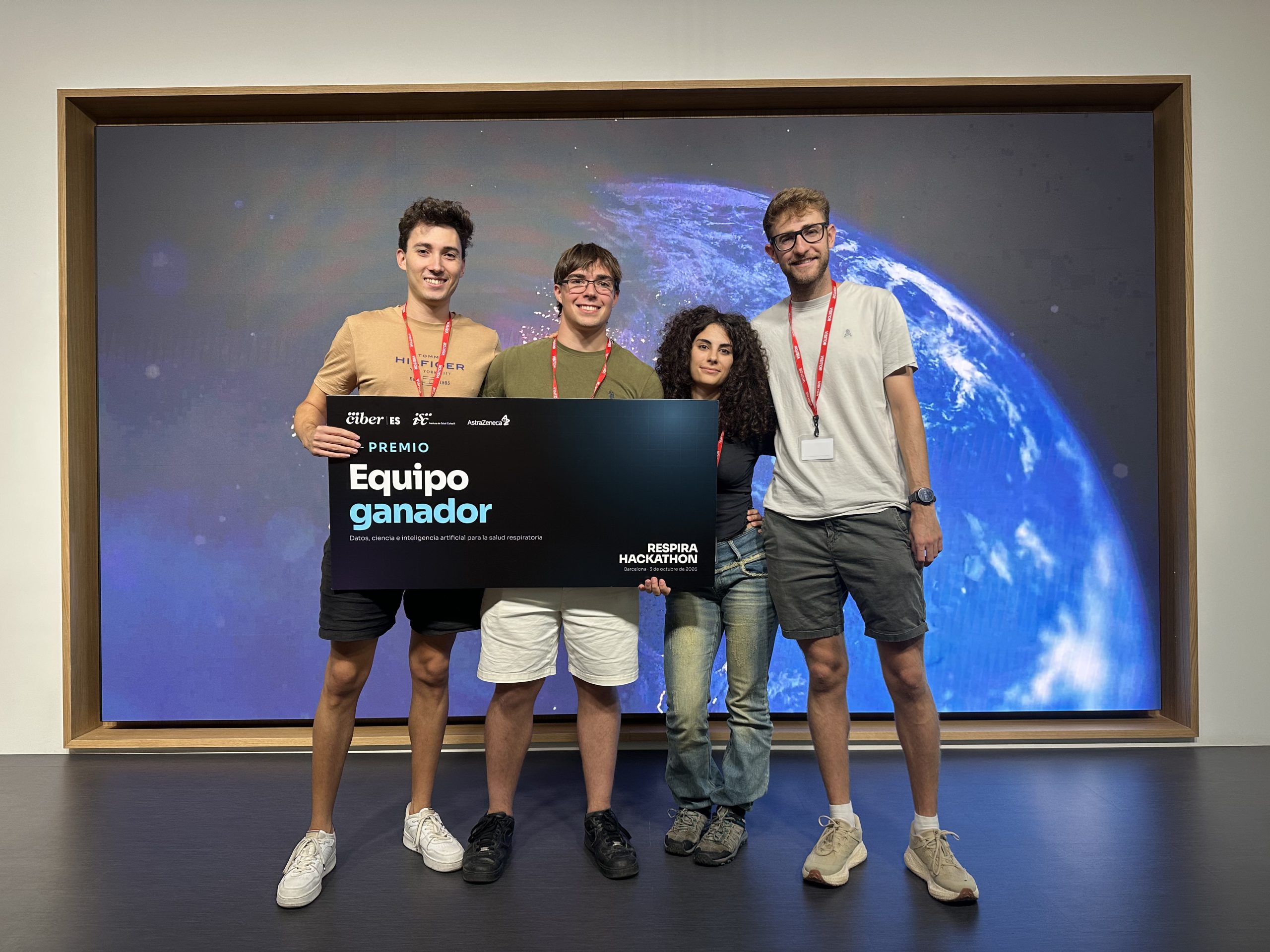
Last week, lab members Roger Casals and Ian Carbó, together with Mireia Navarro and Gabriel Ruiz, took part in the Respira Hackathon, held in person from October 1 to 3, 2026, at AstraZeneca’s Estel building (Av. Roma 81, Barcelona), where their project received the award for the COVID-19 challenge. Both Roger and Gabriel are PhD candidates in the interuniversity PhD programme in Bioinformatics at UVic-UCC: Roger is supervised by Jordi Villà-Freixa and Adrián López García de Lomana, and Gabriel by Mireia Olivella.
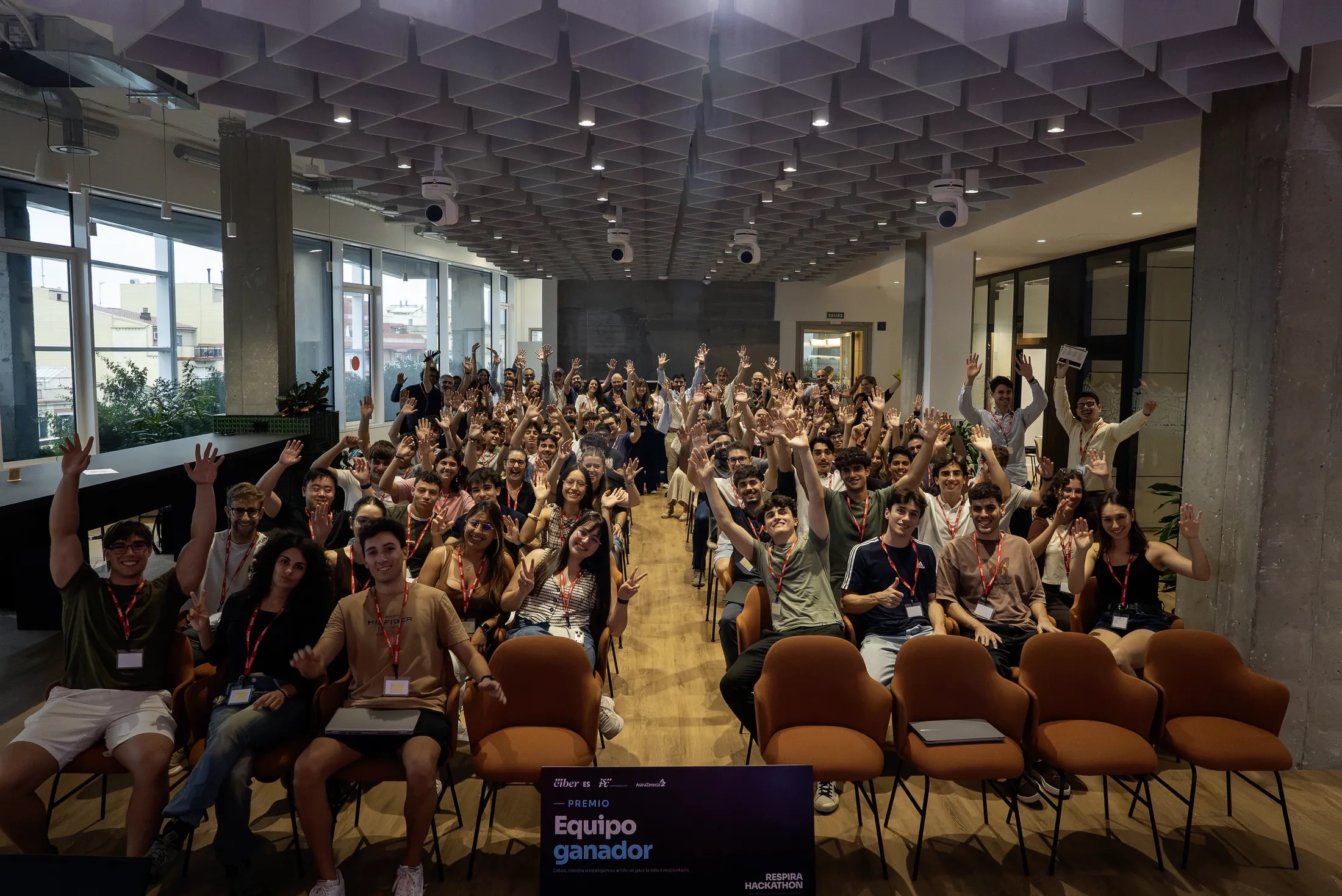
Respira was the first international CIBER hackathon on respiratory diseases. It was jointly organized by CIBERES, the Spanish biomedical research network on respiratory diseases (part of the Instituto de Salud Carlos III and the Spanish Ministry of Science, Innovation and Universities), and AstraZeneca. The Facultat d’Informàtica de Barcelona (UPC) and the Barcelona Supercomputing Center (BSC-CNS) collaborated in the organization, providing their expertise and advanced computing capacity, with further support from the Universitat de Barcelona and Kunsen. For 48 hours, teams of up to four people with diverse backgrounds worked on real clinical problems, guided by experts in respiratory medicine, genetics, immunology and bioinformatics, before presenting their solutions to a jury.
The event proposed four challenges, each framed from both a health and a technology perspective:
- Pulmonary fibrosis: finding a simple molecular signature, measured at the diagnosis of interstitial lung abnormalities, that identifies the patients most likely to progress to idiopathic pulmonary fibrosis, using clinical variables and serum levels of around 3,000 proteins.
- COPD: automatically extracting subtle structural changes from CT scans and combining them with clinical and molecular data to detect early lung damage before the disease can be diagnosed by spirometry.
- Severe asthma: designing an AI-based “digital twin” of the patient to simulate treatment strategies with biologic therapies and anticipate their outcomes.
- COVID-19 and other respiratory viruses: turning clinical, functional, radiological and follow-up data into a map of patient profiles that recover in similar ways after a severe respiratory infection.
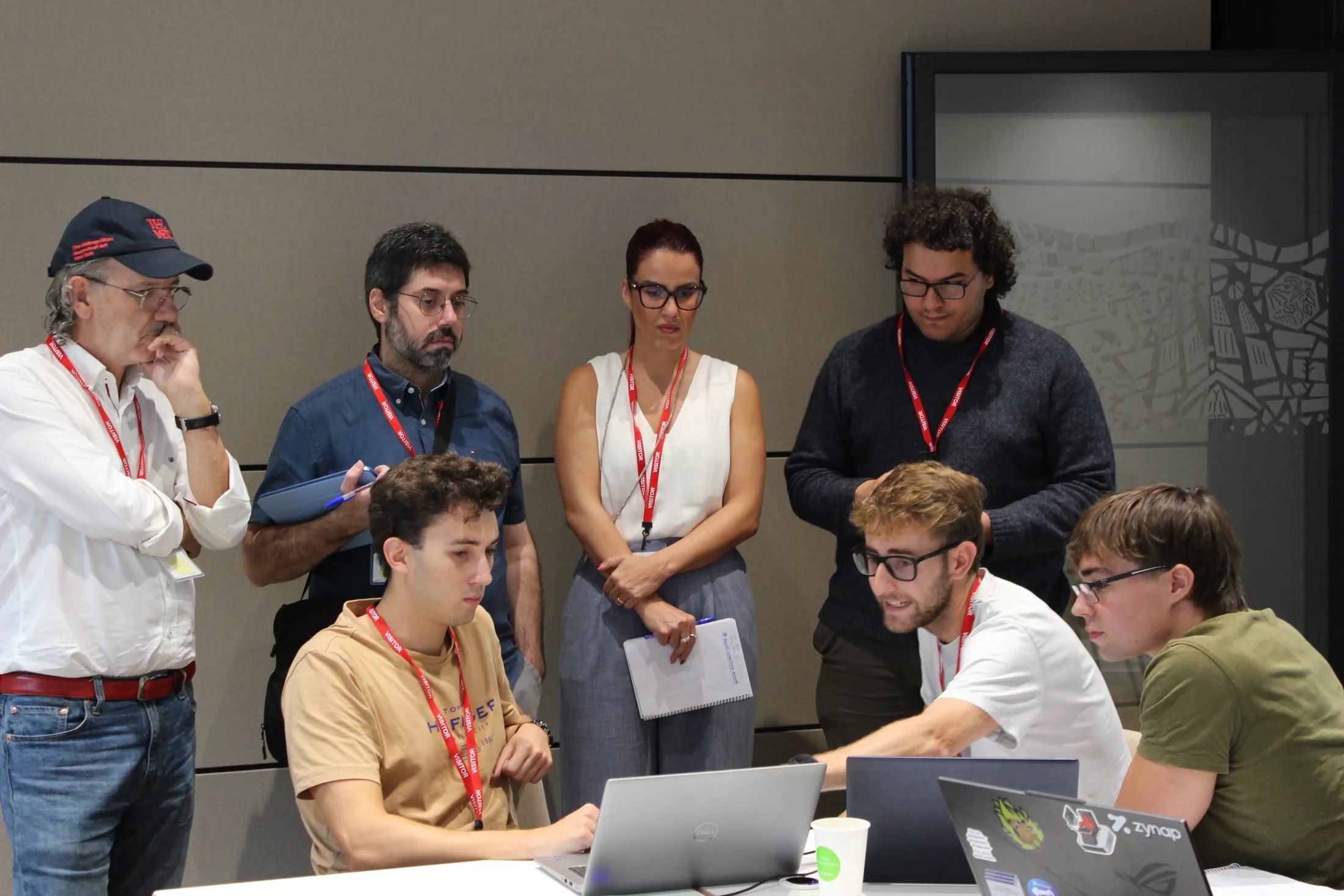
Our team took on the COVID-19 challenge, which focused on the long-term after-effects of COVID-19 and other severe hospital stays, including intensive care (ICU), using patient datasets collected by different hospitals. After a severe respiratory infection, some patients recover fully, while others suffer for months or years from breathlessness, fatigue, memory problems or muscle weakness. Current classifications often lump together people with very different needs, so finding reproducible, clinically meaningful patient profiles is a first step towards more personalized care.
Drawing on their multidisciplinary expertise, the team developed a solution that connects data science and clinical practice, a link between the two fields that is both urgent and much needed. Their proposal, “Early Prediction of Post-COVID-19 Clinical Follow-Up Need: A Tool for Clinicians,” is a two-stage hierarchical Bayesian model that accounts for differences between hospitals. It was validated on later patients and on hospitals the model had never seen.
The jury awarded the team first prize in the COVID-19 challenge, shared ex aequo with the team “ResFen.”
Congratulations to the whole team and the rest of participants!