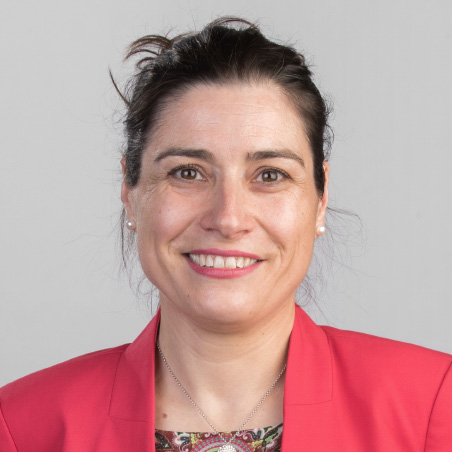
Marta Otero Viñas
Director of The Tissue Repair and Regeneration Laboratory
Email: marta.otero@uvic.cat
ORCID: 0000-0003-2718-9977
Scientific Profile: URECERCA
Marta Otero is a professor in the Department of Biosciences and also serves as the Director of the Doctoral School at the University of Vic-Central University Catalonia (UVic-UCC). She began her research career working in Professor Lina Badimon’s laboratory, where she earned her Ph.D. working on cardiovascular disease research. Later, she focused her research on cutaneous wound healing and served as a visiting researcher in the Department of Dermatology at Boston University School of Medicine from 2014 to 2016.
Currently, Marta Otero leads the TR2Lab where she is dedicated to better understanding the mechanisms of tissue repair and regeneration. Her primary research interests are in the area of chronic wounds and she works on developing translational projects focused on cell-based therapeutics and tissue engineering.
Over the years, Marta Otero has held several leadership positions, including the Director of the Doctoral Program in Medicine and Biomedical Sciences (2019-2023), Vice-Dean for Research at the Faculty of Medicine at the UVic-UCC (2018-2019), and Director of Research and International Relations of the Faculty of Medicine at the UVic-UCC (2017-2018). She also served as the Vice President for research and knowledge transfer at the University of Vic-Central University of Catalonia (2008-2014). Previously, she created and developed the cell culture unit at the Cardiovascular Research Center in Barcelona from 2003 to 2006.
Marta Otero holds a Ph.D. in Biochemistry and Molecular Biology (2004) from Universitat de Barcelona, a Postgraduate degree in Strategic Management of Universities (2010) from Universitat Politècnica de Catalunya, and a Bachelor’s degree in Biochemistry (1999) and Chemistry (1999) from Universitat de Barcelona. Additionally, she received training in Human Subjects Research (2016) from the CITI Program and in working in Good Manufacturing Practices (GMP) facilities (2016) from Boston University School of Medicine.
My last happenings:
Comprehensive proteomic profiling of platelet-rich plasma from elderly individuals: insights for autologous therapeutic applications
Authors: Anna Buisán-Farré, Montserrat Serra-Mas, Elisabet Sarri, Verónica Salgado-Pacheco, Gianluca Arauz-Garofalo, Antonia Odena-Caballol, Marta Vilaseca, Marina Gay, Marta Ferrer-Solà, Clara Masó-Albareda, Marta Casals-Zorita, Marta Otero-Viñas Clinical Proteomics. 2026 DOI: 10.1186/s12014-026-09630-3 Funding: Instituto de Salud Carlos III (PI19/01379 and PI24/00211), the European Union, the PECT Osona Transformació Social project (001-P-000382), the INVESTIGO programme (2022 INV-1 00037), and a doctoral fellowship from the University of Vic-Central University of Catalonia. Proteomics analyses were performed at the IRB Barcelona Mass Spectrometry and Proteomics Core Facility (IU16-015983). Read more Abstract Background Autologous platelet-rich plasma (PRP) is commonly used to enhance tissue repair. [...]
TR2Lab was present at ETRS 2026 Annual Meeting
Dr.Elisabet Sarri and PhD candidate Natalia Palacio, members of TR2Lab, participated in the ETRS 2026 Annual Meeting, "Research, Repair, Regenerate", held in Rouen, France, from 2 to 4 September 2026. Organized by the European Tissue Repair Society (ETRS), the meeting is recognized as one of the leading international forums for researchers and clinicians working in tissue repair, wound healing and regenerative medicine. The conference brought together experts from across Europe and beyond to discuss emerging strategies for improving wound healing, with scientific sessions covering topics such as inflammation and tissue repair, biomaterials and bioengineering, wound microbiology and biofilms, stem cells, [...]
Punch skin grafting for patients with no-option for revascularisation chronic limb-threatening ischaemia: A case series
Authors: Masó-Albareda, C*; Ferrer-Solà, M; Casals-Zorita, M; Palacio-Arronis, N; Espaulella-Panicot, J; Otero-Viñas, M. Journal of Vascular Nursing. 2026 DOI: 10.1016/j.jvn.2026.06.001 Read More Abstract Objective: No-option for revascularisation Chronic Limb-Threatening Ischaemia (CLTI) is often a terminal diagnosis for older patients, leading to survival and limb preservation rates that are of concern, as it frequently results in amputation and increased mortality. This study aimed to describe the clinical outcomes of wounds in patients with no-option CLTI treated with punch skin grafting (PSG), a partial-thickness skin transplantation procedure. Method: This clinical case series included patients with no-option for revascularisation CLTI [...]