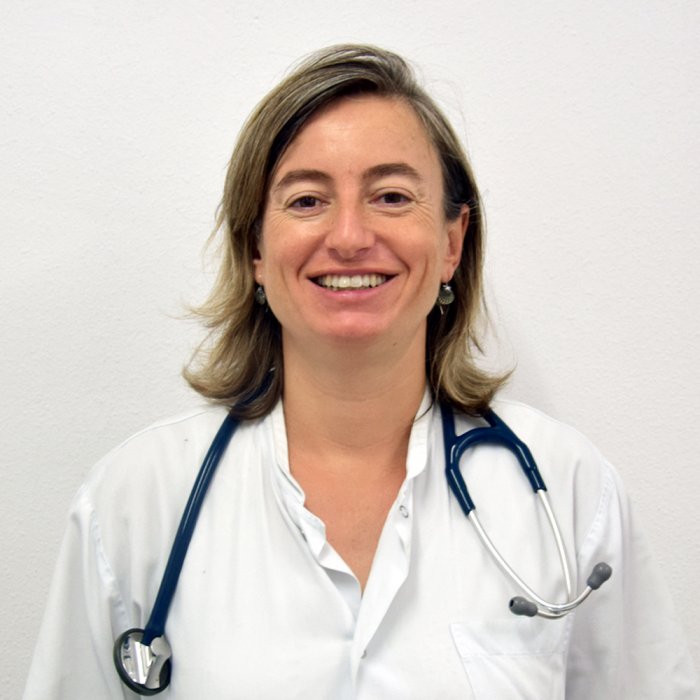
Lídia Carballeira Pol
Member of the Determinants of Arrhythmogenesis Research Line
Email: lidia.carballeira@umedicina.cat or lcarballeira@chv.cat
ORCID: 0000-0001-9819-4269
Scientific Profile: URECERCA
Dra. Lidia Carballeira is a Cardiology Specialist at the Consorci Hospitalari de Vic, with advanced expertise in cardiac electrophysiology and device therapy. She trained as a cardiologist at Hospital de la Santa Creu i Sant Pau (Barcelona), where she developed a strong interest in arrhythmias and sports cardiology, completing early research on electrocardiographic alterations in elite athletes, particularly early repolarization patterns.
She subsequently pursued subspecialized electrophysiology training at Hospital de Sant Pau and the Central University Hospital of Asturias—one of Spain’s most active EP centers—achieving European Level‑2 Certifications in Cardiac Electrophysiology and Cardiac Devices in 2017.
Her research career expanded with a competitive post‑residency fellowship funded by the Spanish Society of Cardiology at the Hospital of the University of Pennsylvania (USA), where she investigated clinical and electrical predictors of premature ventricular contraction–induced cardiomyopathy. This experience further strengthened her commitment to translational electrophysiology.
Dra. Carballeira has contributed several international publications in leading electrophysiology journals.. Her work spans ventricular arrhythmias, early repolarization in athletes, complex ablation strategies, conduction system pacing, and arrhythmia outcomes in neuromuscular disease.
She is also involved in medical education, teaching at the Faculty of Medicine of the University of Vic, where she contributes to training in cardiac arrhythmias through problem‑based learning and clinical simulation.
Currently, Dra. Carballeira is pursuing her PhD at the University of Vic–Central University of Catalonia (UVic‑UCC), focusing on atrial fibrillation and the pathophysiological mechanisms involved in preventing atrial myopathy through cardiac rehabilitation—a line of work aligned with her long‑standing interest in integrating clinical electrophysiology, preventive cardiology, and translational research.
My last happenings:
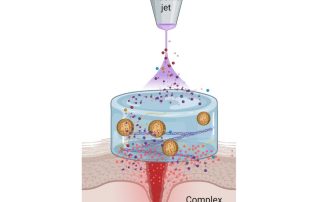
Exploiting Hormesis for Plasma-treated Hydrogel Therapeutic platforms (HormeTic)
Subprojects: Subproject 1: "Exploiting Hormesis for plasma-treated hydrogel therapeutic platforms for cancer treatment (HormOnc)". Subproject 2: "Exploiting Hormesis for plasma-treated hydrogel therapeutic platforms for Healing of complex cutaneous wounds (HormHeal)". Original Title (English): Exploiting Hormesis for plasma-treated hydrogel therapeutic platforms for Healing of complex cutaneous wounds (HormHeal). Objective: Innovating in the healing of complex wounds. TR2Lab research team members: Albert Espona-Noguera (Principal Investigator). Cristina Canal (PI1 of Subproject 1) & Francesco Tampieri (PI2 of Subproject 1). Members of TR2Lab who participate in this project: Elisabet Sarri, Laia Bosch, Gemma Sangüesa, Francesc Sant Masoliver, Cristina Martin Mancera, David Benito Guasch, Clara Masó [...]
Lactic acid as a marker of therapeutic response
Members: Dr M. Parera (CHV), Dr I. Barba (Medicina UVic) Financial support: APR-IRIS-CC The Project “Lactic acid as a marker of therapeutic response” has received approval from the IRIS-CC ethics committee and will start recruiting patients in earnest. The project is a collaboration between Consorci Hospitalari de Vic (Dr M. Parera) and the faculty of medicine UVic (Dr I.Barba) and will evaluate lactic acid as a potential marker of therapeutic response in non-small cell lung cancer patients. We would like to thank all the patients who selflessly participate in this project. El projecte «L'àcid làctic com a [...]
Predictors of Recurrence and Survival in Endometrial Cancer: A 22-Year Single-Center Cohort Study
Funding: Industrial Doctorates Plan of the Government of Catalonia (Industrial Doctorate; DI-2024-00104) Osona Contra el Càncer (OCC) «Ajuts per a Projectes de Recerca Interns» call of the Fundació d’Estudis Superiors en Ciències de la Salut (FESS; APR-2025-FESS) Authors: E. Sardo (1,6,7,8,), M. Alejo Sánchez (2,7), M. Parera Roig (1,6,7,8,), C. Cruz Zambrano (6,7,8,), N. Espejo Herrera (2,8), K. Salas León (2), A. Canet Gómez (2), M. Armengou Ríos (2), C. Vila Díaz (2), E. Puigoriol Juvanteny (3), S. Moros Weakner (4), V. Álvarez Torrecillas (4), I. Gallego Anton (8), M.Panadès Tejero (8), M. Zarcero Estevez (5), S. Griñó [...]