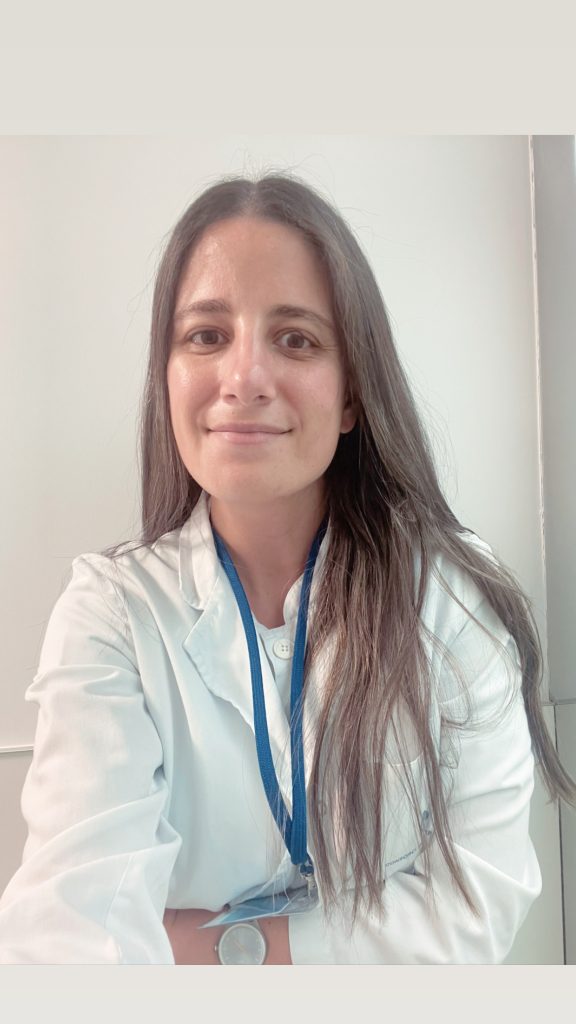
Emilia Gabriela Sardo
Member of the Cancer Profiling Research Line
Email: emiliagabriela.sardo@uvic.cat
ORCID: 0000-0002-1764-0528
Scientific Profile: URECERCA
I am a Medical Oncologist who graduated in Medicine from the Universidad Católica de Córdoba. After completing my residency training, I pursued a fellowship at the Hospital Universitario Vall d’Hebron and subsequently undertook an observership at the Università degli Studi della Campania Luigi Vanvitelli in Naples, Italy.
I currently work as a Consultant Medical Oncologist at the Hospital Universitari de Vic, where I am involved in clinical work and clinical research, alongside teaching activities. My clinical practice focuses on breast cancer and gynaecological cancers, allowing me to integrate patient care with research in a direct and meaningful way. I am actively involved in the training of medical residents and in undergraduate teaching at the Universitat de Vic – Central University of Catalonia, where I serve as Associate Professor of Oncology.
Since September 2022, I am pursuing a PhD in Medicine and Biomedical Sciences at the Universitat de Vic – Central University of Catalonia, supported by an Industrial Doctorate fellowship. My research focuses on translational research in gynaecological cancers, with a particular emphasis on endometrial cancer. In parallel, I am also enrolled in a postgraduate Expert Programme in gynaecological cancers at the Universitat de Girona, further strengthening my specialised training in this field.
My last happenings:
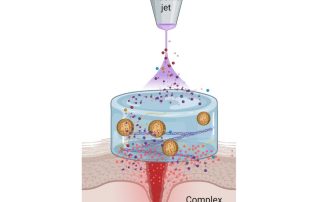
Exploiting Hormesis for Plasma-treated Hydrogel Therapeutic platforms (HormeTic)
Subprojects: Subproject 1: "Exploiting Hormesis for plasma-treated hydrogel therapeutic platforms for cancer treatment (HormOnc)". Subproject 2: "Exploiting Hormesis for plasma-treated hydrogel therapeutic platforms for Healing of complex cutaneous wounds (HormHeal)". Original Title (English): Exploiting Hormesis for plasma-treated hydrogel therapeutic platforms for Healing of complex cutaneous wounds (HormHeal). Objective: Innovating in the healing of complex wounds. TR2Lab research team members: Albert Espona-Noguera (Principal Investigator). Cristina Canal (PI1 of Subproject 1) & Francesco Tampieri (PI2 of Subproject 1). Members of TR2Lab who participate in this project: Elisabet Sarri, Laia Bosch, Gemma Sangüesa, Francesc Sant Masoliver, Cristina Martin Mancera, David Benito Guasch, Clara Masó [...]

Lactic acid as a marker of therapeutic response
Members: Dr M. Parera (CHV), Dr I. Barba (Medicina UVic) Financial support: APR-IRIS-CC The Project “Lactic acid as a marker of therapeutic response” has received approval from the IRIS-CC ethics committee and will start recruiting patients in earnest. The project is a collaboration between Consorci Hospitalari de Vic (Dr M. Parera) and the faculty of medicine UVic (Dr I.Barba) and will evaluate lactic acid as a potential marker of therapeutic response in non-small cell lung cancer patients. We would like to thank all the patients who selflessly participate in this project. El projecte «L'àcid làctic com a [...]
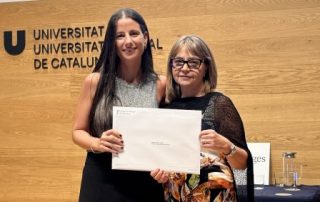
Predictors of Recurrence and Survival in Endometrial Cancer: A 22-Year Single-Center Cohort Study
Funding: Industrial Doctorates Plan of the Government of Catalonia (Industrial Doctorate; DI-2024-00104) Osona Contra el Càncer (OCC) «Ajuts per a Projectes de Recerca Interns» call of the Fundació d’Estudis Superiors en Ciències de la Salut (FESS; APR-2025-FESS) Authors: E. Sardo (1,6,7,8,), M. Alejo Sánchez (2,7), M. Parera Roig (1,6,7,8,), C. Cruz Zambrano (6,7,8,), N. Espejo Herrera (2,8), K. Salas León (2), A. Canet Gómez (2), M. Armengou Ríos (2), C. Vila Díaz (2), E. Puigoriol Juvanteny (3), S. Moros Weakner (4), V. Álvarez Torrecillas (4), I. Gallego Anton (8), M.Panadès Tejero (8), M. Zarcero Estevez (5), S. Griñó [...]