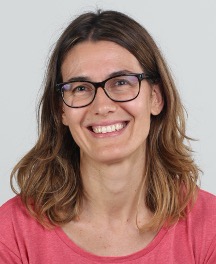
Eulàlia Puigdecanet Riubugent
Member in the Research line Mechanisms of tissue repair and regeneration
ORCID: 0000-0001-6067-9332
Scientific Profile: URecerca
Eulàlia Puigdecanet is Professor in the Faculty of Medicine and in the Faculty of Sciences and Technology at the University of Vic-Central University Catalonia (UVic-UCC).
Dr. Puigdecanet research career has been related to genomics and molecular biology by performing translational research using high-throughtput technologies. She developed her PhD within a hospital context, at Cytogenetics and Molecular biology Laboratory at Hospital del Mar (Barcelona). She focused on the characterization of haematopoietic diseases at molecular level using techniques for omics data analysis together with routine diagnostic procedures. Later, she continued her research career within the Microarray Analysis Service at the Institut Hospital del Mar Medical Research Institute (IMIM), where she worked as Laboratory Responsible (2009-2019). In this period, she developed multiple projects using high-throughput technologies to elucidate the genomic and molecular basis of cancer and other diseases. Currently, she has joined TR2Lab to investigate the mechanisms underlying tissue repair and regeneration.
Eulàlia Puigdecanet is PhD in Cellular Biology from Universitat Autònoma de Barcelona (2012) and a degree in Biology from Universitat Pompeu Fabra (2003), with a specialization in Clinical analysis laboratory.
My last happenings:
Lactic acid as a marker of therapeutic response
Members: Dr M. Parera (CHV), Dr I. Barba (Medicina UVic) Financial support: APR-IRIS-CC The Project “Lactic acid as a marker of therapeutic response” has received approval from the IRIS-CC ethics committee and will start recruiting patients in earnest. The project is a collaboration between Consorci Hospitalari de Vic (Dr M. Parera) and the faculty of medicine UVic (Dr I.Barba) and will evaluate lactic acid as a potential marker of therapeutic response in non-small cell lung cancer patients. We would like to thank all the patients who selflessly participate in this project. El projecte «L'àcid làctic com a [...]
Predictors of Recurrence and Survival in Endometrial Cancer: A 22-Year Single-Center Cohort Study
Funding: Industrial Doctorates Plan of the Government of Catalonia (Industrial Doctorate; DI-2024-00104) Osona Contra el Càncer (OCC) «Ajuts per a Projectes de Recerca Interns» call of the Fundació d’Estudis Superiors en Ciències de la Salut (FESS; APR-2025-FESS) Authors: E. Sardo (1,6,7,8,), M. Alejo Sánchez (2,7), M. Parera Roig (1,6,7,8,), C. Cruz Zambrano (6,7,8,), N. Espejo Herrera (2,8), K. Salas León (2), A. Canet Gómez (2), M. Armengou Ríos (2), C. Vila Díaz (2), E. Puigoriol Juvanteny (3), S. Moros Weakner (4), V. Álvarez Torrecillas (4), I. Gallego Anton (8), M.Panadès Tejero (8), M. Zarcero Estevez (5), S. Griñó [...]
Bringing Science Closer to the Classroom for a Second Consecutive Year during European Researchers’ Night 2026
As part of European Researchers' Night 2026, PhD candidate Clara Masó once again visited Els Castanyers School in Viladrau to bring science closer to young students. For the second consecutive year, pupils from 3rd, 4th and 5th grade took part in interactive workshops designed to introduce them to scientific research, health, hygiene, microorganisms and the scientific method through hands-on activities and discussion. During the first visit, Clara introduced pupils to several key scientific concepts, including the scientific method, the contributions of women in science, how wounds heal and why some wounds fail to heal, advanced wound therapies used in [...]