
Laia Bosch-Presegué
Coordinator of the Epigenetics and tissue transformation research line in the TR2Lab
Email: laia.bosch@uvic.cat
ORCID: 0000-0001-8025-2416
Scientific Profile: URECERCA
Professor of the Faculty of Health Sciences and Welfare at the University of Vic – Central University of Catalonia.
She did his Ph.D. in the Professor Pere Garriga laboratory at Universitat Politècnica de Catalunya. During her PhD studies, she focused on the structure-function relationships of the prototype of G-protein-coupled receptors Rhodopsin and in the molecular basis of disease associated with mutations in this important receptor causing retinal degenerations, like retinitis pigmentosa.
From 2008 to 2018, she joined as a researcher in the Chromatin Biology group led by Ph.D. Alex Vaquero, in the Department of Epigenetics and Cancer Biology Program at IDIBELL. Her primary research interest was to understand the mechanisms that rule Chromatin dynamics and in particular, how the post-translational modifications of the N-terminal tails of histones are important for ensuring a proper control of chromatin functions interplay with the rest of chromatin machinery to keep a healthy and efficient Chromatin organization.
After her incorporation as a Professor at the University of Vic – Central University of Catalonia, Ph.D. Laia Bosch-Presegué has joined the Research Line of Epigenetics and tissue transformation in TR2Lab. Currently, her research is focused on studying epigenetic events in different pathologies and how different interventions can prevent their appearance, improve symptoms or contribute to their healing.
My last happenings:
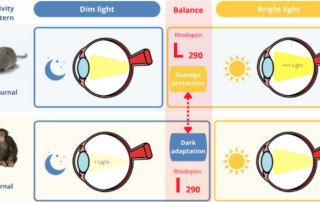
A key amino acid site associated with rhodopsin mammal evolution to diurnal vision.
Authors: Fernández-Sampedro MA, Ramon E, Aguileta G, Bosch-Presegué L, Garriga P. Sci Rep. 2025 Dec 26;16(1):411 doi:10.1038/s41598-025-29872-9. Read More Abstract Rhodopsin is a photoreceptor protein found in the vertebrate retina used as a landmark for vision evolution studies at the molecular level. Here, we examined the biochemical and functional performance of modern rhodopsin from three different mammal species- bovine, murine and human-to analyze their visual pigment evolutionary relationships. We selected these species for their relevance in vision research, their different position on the phylogenetic tree and their diverse ethology regarding nocturnal (mouse) and diurnal (bovine and human) life. [...]
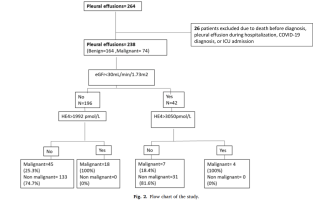
The diagnostic accuracy of HE4 in the differential diagnosis of pleural effusions.
Authors: Bérgamo S, Trapé J, González-García L, González-Fernández C, Vergara C, la-Torre ND, Bosch-Presegué L, Otero-Viñas M, Catot S, Crespo-Casal M, Rives-Jimenez J, Arnau A, Costa R, Cugat JR, Gonzalez-Sánchez F, Pla-Salas X, Sant F. Clin Chim Acta. 2025 Jan 30;566:120027. doi:10.1016/j.cca.2024.120027 Read More Abstract Background: Pleural effusions are challenging to diagnose, with approximately 20-50% of malignant effusions not diagnosed by cytology. Human epididymal protein 4 (HE4) may be useful in the differential diagnosis of pleural effusions. In serum, this biomarker shows false-positive results in some benign diseases. The aim of this study was to evaluate the diagnostic utility [...]
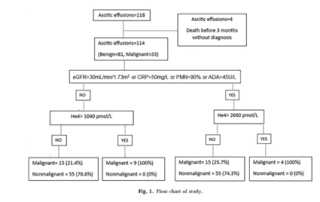
Utility of human epididymis protein 4 in the differential diagnosis of ascites
Authors: Bérgamo S, Trapé J, González-García L, González-Fernández C, Vergara C, de-la-Torre N, Trujillo G, Estivill D, Álvarez-González MA, Bosch L, Otero-Viñas M, Bergós C, Catot S, Ruiz-Hidalgo D, Ros S, Sant F Clin Biochem. 2023 Oct;120:110645. doi:10.1016/j.clinbiochem.2023.110645. Read More Abstract Background and aims: Human epididymal protein 4 (HE4) may be a useful tool in the differential diagnosis of malignant ascites. The aim of this study was to evaluate the diagnostic utility of HE4 for detecting malignant ascites, taking into account the possible false positives identified with adenosine deaminase (ADA), C-reactive protein (CRP), % polynuclear cells (%PMN) and [...]